What Is Investment Casting for Industrial Parts
Investment casting produces precision industrial components by forming metal in a mold. The process suits complex shapes, tight tolerances, and smooth surfaces needed for pumps, valves, and turbine parts. Engineers use it when geometry or finish requirements exceed sand casting capabilities.
- Investment casting uses a sacrificial mold to capture fine detail and produce smooth surfaces.
- It suits industrial components with complex internal passages, thin walls, or tight dimensional control.
- Material choice and gating design drive yield, cost, and acceptance risk.
- Engineers compare investment casting against sand casting based on geometry, tolerance, and volume.
- Defect screening, such as X-ray or liquid penetrant testing, protects reliability of critical parts.
What Makes Investment Casting Different
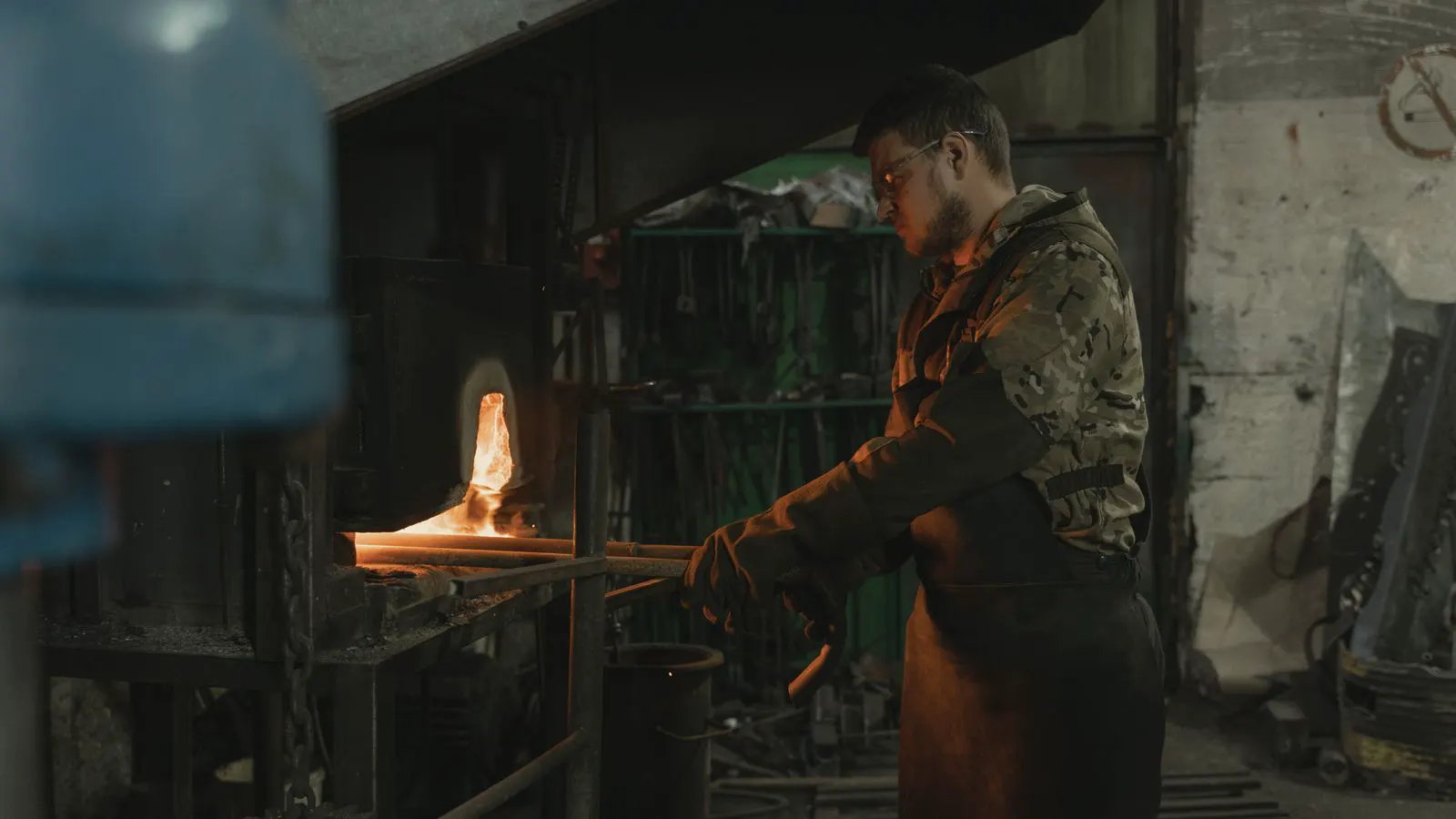
Investment casting is a metal forming process that builds a part around a mold made of ceramic or other refractory material. The mold is created by dipping a wax pattern into slurry until the wall thickness reaches a stable level. The wax is then burned out, leaving an empty cavity. Molten metal is poured into that cavity, and the mold disintegrates or is broken away after cooling.
The key distinction is that the casting follows the geometry of the wax pattern with high fidelity. Sand casting also creates a mold, but the mold is formed around a core and a pattern, often with a larger parting line and a coarser grain structure. Investment casting removes much of that surface texture and allows thinner walls, smaller radii, and more detailed features. For industrial components, that difference changes what is practical to design.
The process is often called lost-wax casting because the pattern is consumed in the firing step. It is also known as centrifugal investment casting when the part is spun during solidification to reduce porosity and improve dimensional stability. Both methods fall under the same family and share the same basic decision points: pattern design, material selection, gating, and inspection.
Why Engineers Choose It for Complex Industrial Parts
Engineers select investment casting when the part contains features that are difficult or uneconomic in sand casting. Thin walls, small bores, internal passages, and tight tolerances are common drivers. A pump impeller may have multiple vanes that must align closely to the eye and discharge. A valve body may need a smooth bore to reduce friction and maintain sealing. A turbine blade airfoil may need a thin leading edge to manage flow.
The process handles these features well because the mold wall is thin and the surface finish is smooth. Surface finish reduces the need for secondary machining. It also improves the appearance of exposed parts, which matters for instrumentation housings, valve bodies, and decorative industrial equipment. For parts that sit in corrosive service, a smoother surface can slow the start of pitting and erosion.
The trade-off is in volume and tooling. A high-volume production run with simple shapes may be cheaper in sand casting. A low-volume run with complex geometry often favors investment casting. The decision usually comes down to a balance between pattern cost, yield, and downstream machining. If a part requires deep machining anyway, the benefit of a smoother surface shrinks. If the part is mostly as-cast, the benefit is stronger.
How the Process Affects Component Design
Design for investment casting starts with the wax pattern and the mold system, not just the part drawing. The engineer must consider how the part will be held, how the metal will flow, and how the mold will be broken away. Parting lines are placed where they cause the least damage and the least machining. Gates and risers are sized to feed the last areas that solidify.
A common design question is where to place the parting line. In sand casting, the parting line is usually a flat plane that splits the part. In investment casting, the parting line can follow the part geometry more closely, but it still creates a seam that may need grinding. Engineers place seams on non-critical surfaces or in locations that are accessible for finishing. They also avoid placing the seam on a tight-bore section unless the bore is reamed later.
Thin sections are another design consideration. Investment casting can produce walls that are thinner than sand casting, but the metal must still solidify properly. Thin walls cool quickly, which can trap gas or create shrinkage porosity. Designers use risers or adjust the gating to keep the metal flowing where it needs to. They also consider the thermal mass of the part. A heavy flange next to a thin web can create a hot spot that delays solidification and increases the risk of porosity.
Material Options and Their Practical Limits
The metal alloy defines the service life of the part. Investment casting is used with many metals, including carbon steel, stainless steel, nickel alloys, aluminum alloys, copper alloys, and titanium alloys. The choice depends on the environment and the mechanical requirements. A pump in seawater may use a duplex stainless or a nickel alloy. A valve in a chemical plant may use a high-nickel alloy. A turbine component may use a superalloy with heat treatment.
The process is material agnostic in theory, but practical limits exist. Some alloys are difficult to cast because they are reactive, brittle, or prone to hot tearing. The foundry must control the pour temperature, the mold temperature, and the cooling rate. A part that looks simple on paper may require a specialized alloy and a specialized heat treatment to meet the specification.
The engineer should ask the foundry about the metallurgical condition of the as-cast part. Some parts are used as-cast. Others require annealing, solution treating, or heat treatment to relieve stress and improve strength. The heat treatment can change the dimensions, so the drawing should include tolerances that account for that change. It can also change the microstructure, so the foundry should confirm that the alloy meets the required mechanical properties after processing.
Cost, Yield, and Sourcing Decisions
Sourcing an investment casting is not only a price comparison. It is a risk assessment. The cost includes the pattern, the mold, the metal, the labor, the heat treatment, and the inspection. The yield is the percentage of good parts out of the total poured. A high-yield process reduces the effective cost per good part. A low-yield process can make an expensive part prohibitively costly if the defect rate is high.
The engineer should ask for the expected yield based on the part geometry and the alloy. A simple part with thick sections may have a high yield. A complex part with thin walls and small bores may have a lower yield. The foundry should also describe the common defects they see on that type of part. Porosity, misruns, shrinkage, and dimensional drift are typical issues. Knowing the likely defect profile helps the engineer set the inspection strategy and the acceptance criteria.
The pattern cost can be a large portion of the total, especially for low-volume runs. A single pattern can be expensive to make and test. If the part is only needed for a few prototypes, the foundry may use a 3D-printed wax or a resin pattern to reduce cost. For production runs, a metal pattern may be used to improve dimensional stability and reduce wear. The pattern type affects the tolerance of the part and the long-term cost per unit.
A Worked Example: A Pump Impeller
Consider a pump impeller for an industrial chemical transfer line. The impeller has a series of vanes that must guide the fluid from the eye to the discharge. The vanes are thin, and the eye diameter is small. The bore of the shaft hole must be tight to avoid vibration and seal failure. The material is a duplex stainless steel because the fluid is corrosive and the service is intermittent.
A sand casting might produce the impeller, but the surface finish on the vanes would be rough. The roughness would increase flow losses and reduce efficiency. The small bore might be out of tolerance, requiring reaming. The thin vanes might be prone to misruns if the sand mold is not perfectly aligned. The as-cast part might need a lot of secondary machining to reach the required geometry.
An investment casting can produce the impeller with a smoother surface. The vanes follow the wax pattern closely, so the flow path is more accurate. The small bore is closer to the drawing dimension, reducing the amount of reaming needed. The thin walls are supported by a well-designed gating system that keeps the metal flowing into the last sections. The result is a part that is closer to the final geometry after casting. The engineer still inspects the part for porosity and dimensional accuracy, but the starting point is better.
The cost of the investment casting may be higher per unit than sand casting for a simple shape. But for this impeller, the savings in machining, the improved efficiency, and the lower rejection rate can make it the better choice. The engineer also benefits from the ability to iterate the design. If the vane angle needs to change, the wax pattern can be modified. The mold can be updated. The next run reflects the improvement.
Inspection and Quality Checks
Quality control is a major part of investment casting. The foundry should perform in-process checks and final inspections. In-process checks include mold thickness, pour temperature, and cooling rate. Final inspections include dimensional checks, surface finish measurements, and non-destructive testing. X-ray or ultrasonic testing can reveal internal porosity. Liquid penetrant testing can reveal surface cracks. Magnetic particle testing can be used on ferrous parts to detect surface and near-surface defects.
The engineer should define the inspection criteria in the drawing or the purchase order. The level of inspection depends on the criticality of the part. A structural component may require 100 percent X-ray inspection. A non-critical housing may require a sample inspection. The acceptance criteria should match the service risk. A part that fails in service can cause downtime, damage to equipment, or safety hazards.
The foundry should also provide a heat number and a material certificate. The heat number identifies the batch of metal used. The material certificate confirms the chemical composition and the mechanical properties. For critical parts, the engineer may require a mill test report or a third-party inspection. These documents are part of the quality record and are often required for traceability.
Common Mistakes and How to Avoid Them
A common mistake is to design for the process without understanding the process. An engineer may specify a tolerance that is too tight for the casting. Or they may place a feature in a location where it will not solidify properly. The foundry should be involved early in the design. A design review with the foundry can catch problems before the pattern is made.
Another mistake is to assume that a smoother surface is always better. Some parts need a rough surface for thread engagement or for a coating. A smooth surface can make it harder to apply a coating if the surface is too clean. The engineer should specify the required surface finish and the reason for it. The foundry can then suggest the best way to achieve it.
A third mistake is to ignore the yield. A part that looks cheap on paper may be expensive if the yield is low. The engineer should ask for the expected yield and the defect profile. If the yield is low, the cost per good part may be high. The engineer may need to redesign the part to improve the yield. A small change in the geometry can make a big difference in the outcome.
Frequently asked questions
What is the main advantage of investment casting over sand casting for industrial components?
Investment casting produces smoother surfaces and finer detail, which reduces secondary machining and improves the accuracy of complex features.
Can investment casting handle thin walls and small bores?
Yes. The thin mold wall and the smooth surface allow thin sections and small bores to be produced with better dimensional control than sand casting.
What materials can be used for investment casting?
Many metals can be used, including carbon steel, stainless steel, nickel alloys, aluminum alloys, copper alloys, and titanium alloys.
How does the process affect the surface finish of the part?
The ceramic mold creates a smooth surface that is closer to the final shape. This reduces the need for machining and improves the appearance of exposed parts.
What is the most important question to ask a foundry before sourcing?
Ask for the expected yield and the common defect profile for the part. This helps the engineer understand the cost per good part and the inspection strategy.