How to Audit a Foundry for Process Stability
A foundry audit verifies process stability by reviewing records, observing operations, and checking material control. This guide outlines prerequisites, numbered steps, and verification checks to evaluate supplier capability before placing a production order.
- Define audit scope and acceptance criteria before contacting the foundry.
- Review heat numbers, dimensional records, and defect logs to trace material history.
- Observe the actual production line rather than relying on sample presentations.
- Verify calibration status and maintenance schedules for critical equipment.
- Close the audit with a written verification of findings and corrective actions.
A foundry audit is a structured review of how a supplier controls its processes. It goes beyond reviewing marketing materials and sample parts. It tests whether the foundry can produce a specific investment casting part with predictable dimensions, chemistry, and surface finish.
This guide walks through the prerequisites, the on-site or virtual audit steps, and the final verification. It applies to both new supplier selection and periodic re-audits of existing suppliers.
Define Scope and Prerequisites
Before contacting a foundry, define what the audit must answer. The scope depends on the part. A structural component, a medical device, and a decorative part require different levels of scrutiny.
The primary keyword for this section is foundry audit, but the actual work begins with preparation. You need a written list of the parts to be evaluated. Include dimensions, material specification, tolerances, surface finish requirements, and heat treatment.
Request the foundry’s current quality manual, ISO certificates, and recent customer complaint reports. Ask for the last three months of dimensional inspection records. If the foundry cannot provide these documents, the audit will be limited to verbal explanations and visual observation.
Set the acceptance criteria. Define what constitutes a stable process. For example, the foundry must show a consistent defect rate below a defined percentage. It must demonstrate that all critical dimensions fall within tolerance across multiple production lots.
Review Material Control and Traceability
Material control is the foundation of investment casting. The first step in the audit is to check how the foundry receives, stores, and tracks raw materials.
Ask how the foundry verifies incoming ingots, alloys, or scrap. Check for mill test certificates and heat numbers. Trace a single heat number from the raw material receipt through melting, gating, and casting.
A stable foundry keeps detailed records. Each ingot or scrap lot should have a unique identifier. The records should show the date of receipt, the supplier, the chemical composition, and the storage location.
If the foundry mixes scrap without tracking its source, the process is not stable. Untracked scrap introduces unknown chemical variability. This variability affects fluidity, shrinkage, and final part properties.
Check the storage area. Scraps should be segregated by alloy type. Contamination between alloy families can cause defects. Look for clear labeling and physical separation.
Observe the Melting and Pouring Process
The melting and pouring process determines the quality of the metal in the mold. This is where process stability becomes visible.
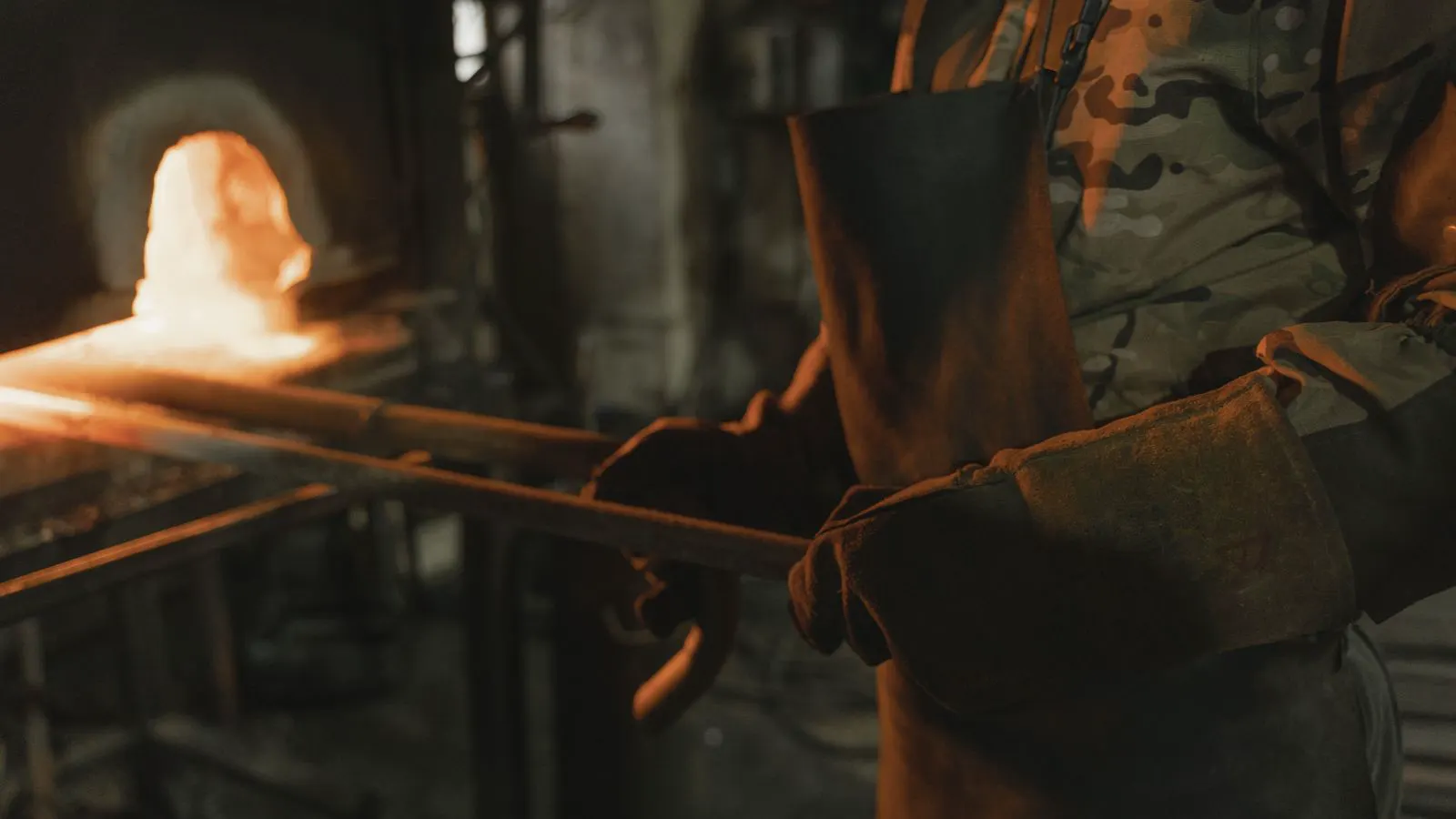
Observe the melting furnace. Check the condition of the crucible or ladle. Look for signs of excessive wear or poor maintenance. A stable foundry maintains its equipment on a documented schedule.
Watch the pouring operation. The foundry should control pouring temperature and rate. For investment casting, the metal must flow into the mold at the correct temperature. Too low a temperature causes incomplete filling. Too high a temperature accelerates shell burn-back and can cause porosity.
Check if the foundry uses a thermocouple or infrared thermometer to monitor melt temperature. Ask for the operating window for the specific alloy. The foundry should record the temperature for each pour.
If the foundry pours by visual inspection alone, the process is not stable. Visual inspection is not consistent enough for precision investment casting. It varies with operator experience and lighting conditions.
The audit should include a review of the pour records. Compare the recorded temperatures to the alloy specification. Look for trends. A stable foundry shows consistent temperatures within the specified range.
Evaluate Mold Preparation and Gating
The mold preparation step is where investment casting differs from other methods. The mold must be stable, consistent, and properly prepared for the specific part.
Observe the molding line. For resin molds, check the mixing, pouring, and curing of the investment. For sand molds, check the compaction and finishing. The goal is consistency.
Look for the gating design. The gating system must be sized correctly for the part. It should fill the mold completely without causing turbulence or premature shell burn-back.
Ask the foundry to show you the gating design for the specific part. A stable foundry uses a documented gating design. The design should be based on fluid simulation or established experience.
Check the mold storage area. Molds should be stored in a controlled environment. Humidity and temperature affect the mold integrity. If the foundry stores molds in a warehouse with no climate control, the process is at risk.
A common mistake is to focus only on the mold surface. The internal structure of the mold matters more. Check for shrinkage, cracking, or weak spots. These defects are not always visible on the surface.
Inspect Quality Control and Inspection Records
Quality control is the final check in the process. The audit must verify that the foundry inspects parts at the correct intervals and with the correct methods.
Review the inspection records. For dimensional checks, look for reports that show the measured values, not just a pass or fail. A stable foundry records the actual dimensions for critical features.
Check the inspection equipment. Calibration certificates should be available. The foundry should use CMMs, micrometers, gauges, or other appropriate tools. The calibration interval should match the equipment’s precision.
Look for the defect classification system. The foundry should categorize defects by type, size, and location. Common defects in investment casting include porosity, hot tearing, and dimensional variation.
Ask for the last six months of defect reports. A stable foundry shows a low defect rate and a clear trend. If the defect rate is increasing, the process is unstable.
The audit should include a review of the first-article inspection. The foundry should inspect the first part from each production run. This catches setup errors before the entire lot is produced.
If the foundry only inspects finished goods, the process is reactive. A stable foundry inspects during production. This allows for immediate correction.
Review Personnel and Training
Process stability depends on people. The audit must evaluate the foundry’s workforce.
Check the training records for operators and inspectors. A stable foundry provides regular training. The training should cover the specific alloy, the part design, and the inspection methods.
Observe the operators. Do they follow the documented procedures? Do they record their measurements? Are they aware of the quality standards?
Ask about the turnover rate. High turnover in the casting line introduces variability. New operators may not be familiar with the specific part’s requirements.
A common mistake is to assume that a certified engineer ensures quality. The foundry may have a certified engineer, but the operators on the floor execute the process. The audit must verify that the operators are trained and competent.
Check the foundry’s communication protocols. How do they report deviations? Do they stop production when a defect is found? A stable foundry has a clear escalation process.
Final Verification
The final step of the foundry audit is verification. This is not a formality. It is the point where the audit results are confirmed.
Compile all findings into a written report. Include the scope, the findings, and the acceptance criteria. Note any nonconformities. For each nonconformity, request a corrective action plan from the foundry.
The corrective action plan should specify the action, the responsible person, and the deadline. Do not accept vague commitments. A stable foundry provides a specific plan with measurable outcomes.
Schedule a follow-up inspection. This should occur after the corrective actions are implemented. The follow-up inspection verifies that the process is stable.
The verification step is critical. Without it, the audit is just a one-time observation. The verification step confirms that the foundry can sustain the process over time.
A stable foundry will welcome the audit. It will provide access to records, operators, and the production line. A less stable foundry may limit access or provide incomplete records.
The audit is not a one-time event. It should be repeated periodically. The process can change. The workforce can change. The equipment can wear. A periodic foundry audit ensures that the supplier remains capable.
The goal of the audit is not to find fault. The goal is to confirm capability. A stable foundry demonstrates capability through records, observation, and verification.
By following these steps, you can evaluate a foundry’s process stability with confidence. The audit provides a clear picture of the foundry’s capability. It reduces the risk of defects, delays, and production losses.
The audit is a practical tool. It is not a theoretical exercise. It is a way to ensure that the foundry can deliver the part you need, with the quality you require.
Audit Scope Table
| Audit Element | What to Check | Reason |
|---|---|---|
| Material Control | Heat numbers, mill test certificates, scrap segregation | Ensures chemical consistency |
| Melting Process | Temperature records, furnace condition, pour rate | Controls metal quality |
| Mold Preparation | Mixing, curing, gating design, mold storage | Ensures dimensional stability |
| Quality Control | Inspection records, calibration, defect logs | Verifies process stability |
| Personnel | Training records, operator competence, turnover | Confirms human capability |
| Verification | Corrective actions, follow-up inspection, report | Confirms sustained capability |
The audit scope table provides a quick reference. It lists the key elements to check and the reason for each. Use this table as a checklist during the audit.
The audit is a structured process. It requires preparation, observation, and verification. The goal is to confirm that the foundry can produce the part with stability and reliability.
By following this guide, you can conduct a thorough foundry audit. You can evaluate the foundry’s process stability and make an informed decision about supplier selection.
The audit is not a one-time event. It is an ongoing process. It should be repeated periodically to ensure that the foundry remains capable.
The audit is a practical tool. It is a way to ensure that the foundry can deliver the part you need, with the quality you require.
Common Mistakes in Foundry Audits
| Mistake | Why It Matters |
|---|---|
| Focusing only on sample parts | Samples do not represent the production process |
| Ignoring scrap tracking | Untracked scrap introduces chemical variability |
| Not reviewing defect trends | A low defect rate today does not guarantee stability tomorrow |
| Assuming equipment calibration | Calibration status must be verified, not assumed |
| Skipping the verification step | Without verification, the audit is just an observation |
The common mistakes table highlights the most frequent errors in foundry audits. Avoid these mistakes to ensure that your audit is thorough and effective.
The audit is a critical step in supplier evaluation. It provides a clear picture of the foundry’s capability. It reduces the risk of defects, delays, and production losses.
The audit is a practical tool. It is not a theoretical exercise. It is a way to ensure that the foundry can deliver the part you need, with the quality you require.
By following this guide, you can conduct a thorough foundry audit. You can evaluate the foundry’s process stability and make an informed decision about supplier selection.
The audit is not a one-time event. It is an ongoing process. It should be repeated periodically to ensure that the foundry remains capable.
The audit is a practical tool. It is a way to ensure that the foundry can deliver the part you need, with the quality you require.
The audit is a structured process. It requires preparation, observation, and verification. The goal is to confirm that the foundry can produce the part with stability and reliability.
By following this guide, you can conduct a thorough foundry audit. You can evaluate the foundry’s process stability and make an informed decision about supplier selection.
The audit is not a one-time event. It is an ongoing process. It should be repeated periodically to ensure that the foundry remains capable.
The audit is a practical tool. It is a way to ensure that the foundry can deliver the part you need, with the quality you require.
The audit is a structured process. It requires preparation, observation, and verification. The goal is to confirm that the foundry can produce the part with stability and reliability.
Frequently asked questions
How often should I audit a foundry?
Conduct an initial audit before placing a production order. Repeat the audit annually or when the foundry changes processes, equipment, or personnel.
Can I conduct a foundry audit virtually?
Yes. A virtual audit can cover document review, video tours of the production line, and interviews with key personnel. It is less thorough than an on-site audit but can be effective for routine re-audits.
What if the foundry cannot provide inspection records?
The foundry's process is not stable. Without records, you cannot verify consistency. Do not place a production order until the foundry can provide the necessary documentation.
How do I verify that the foundry’s defect rate is low?
Request the last six months of defect reports. Look for the total number of defects, the defect rate, and the trend. A stable foundry shows a low defect rate with no increasing trend.
What is the most common mistake in a foundry audit?
Focusing only on sample parts. Samples do not represent the production process. The audit must verify the production process, not just the quality of a single part.