Cost vs Lead Time: Investment Casting Tolerance Trade-Offs
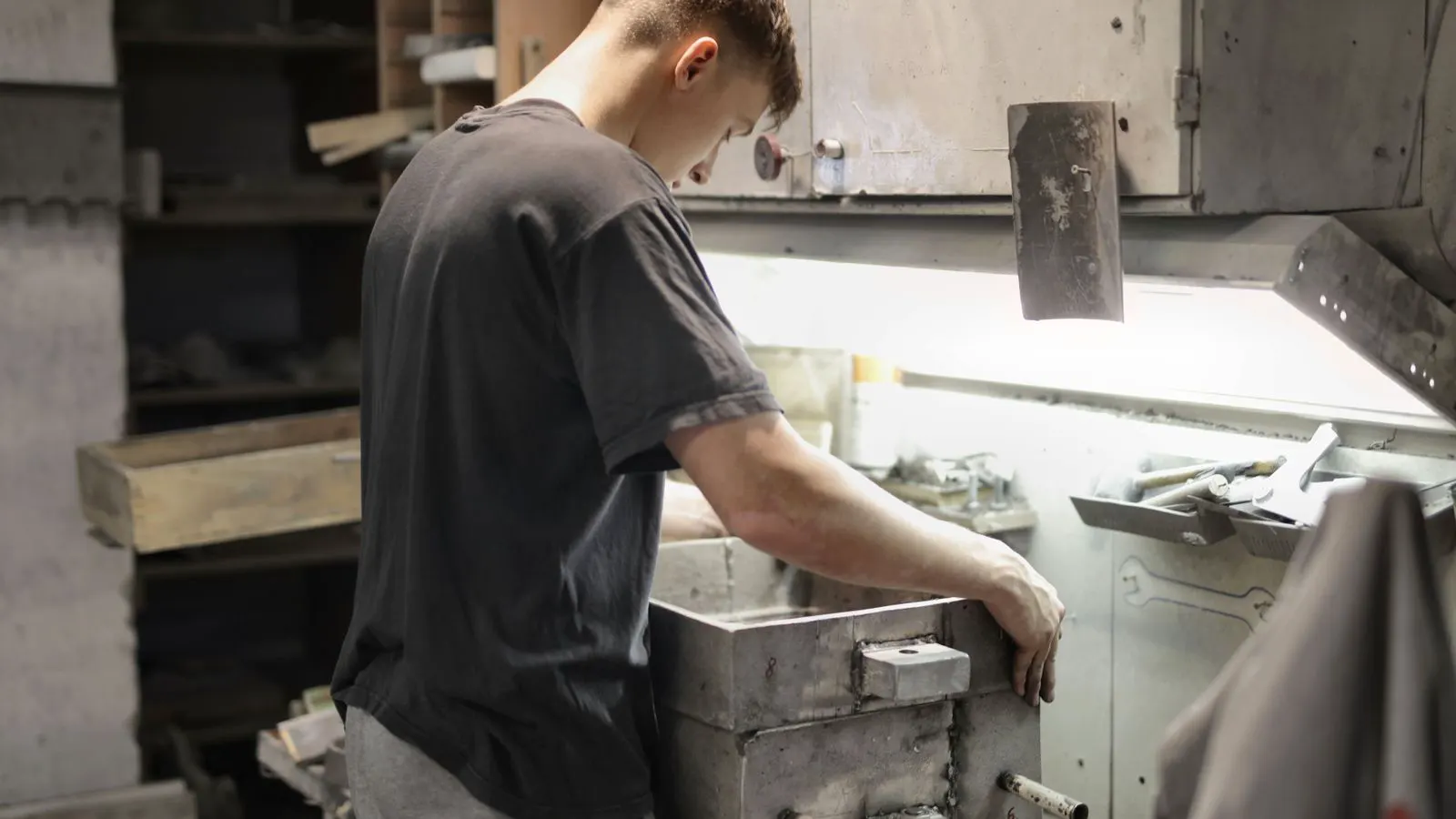
Tighter casting tolerances and finer surface finish require more post-processing, which raises cost and lengthens lead time. This guide explains how these factors interact, how to structure a clear RFQ, and how to compare quotes fairly when selecting a foundry.
- Tighter tolerances shift more work to post-processing, increasing both cost and production time.
- Surface finish requirements determine the level of grinding, lapping, or polishing needed.
- A clear RFQ that separates functional tolerances from cosmetic requirements helps foundries give accurate quotes.
- Comparing quotes based on material, finish, and inspection requirements yields fairer results than comparing unit price alone.
- Designing for the process, not just the part, reduces expensive post-processing steps.
How Tolerance Tightness Changes the Production Process
Investment casting does not produce a finished part. It produces a rough casting. The gap between that rough casting and the final part is closed through post-processing. When a buyer specifies a loose tolerance, the foundry may ship the part after standard cutting and deburring. When a buyer specifies a tight tolerance, the foundry must grind, machine, or finish the part further. That extra work sits on the post-processing schedule.
The cost impact is direct. Every millimeter of tolerance reduction increases the amount of material that must be removed. More material removal means longer machine time, higher labor cost, and more wear on tools. For example, a flange that requires a flatness tolerance of 0.1 mm on a 100 mm face needs significantly more grinding than one that allows 0.5 mm. The difference may seem small on paper, but in a batch of one thousand parts, the accumulated machine time becomes a major cost driver.
Lead time follows the same logic. Grinding and finishing are sequential operations. A part cannot be inspected until it is finished, and it cannot be shipped until inspection passes. If the foundry must hold a part for a second grinding pass, the cycle time extends. During peak production periods, even a small increase in post-processing time can push a delivery date by several days.
How Surface Finish Affects Cost and Schedule
Surface finish is the other side of the tolerance equation. A part with a smooth finish requirement needs more than just cutting. It may need lapping, polishing, or abrasive finishing. These processes are slower than rough milling. They also require specialized equipment and skilled operators.
The surface finish requirement also affects the tolerance. A tight tolerance on a rough surface is difficult to achieve because the surface itself is irregular. If a buyer needs a flat surface that must also be smooth, the foundry must first remove the rough casting skin, then grind the area flat, then finish the surface to the required roughness. Each step adds cost and time.
A common mistake in RFQs is to specify a surface finish without specifying the area. A part may have a mating face that needs a fine finish and a non-critical outer surface that can remain rough. If the RFQ does not distinguish these areas, the foundry may quote for the worst-case scenario. That means paying for finishing on surfaces that do not need it. The result is a higher quote and a longer production cycle.
What Drives the Cost of Post-Processing
The cost of post-processing is not a single number. It is the sum of several variables. The table below lists the main cost drivers and how they affect the final price.
| Cost Driver | Effect on Price | Effect on Lead Time |
|---|---|---|
| Tolerance Tightness | Increases grinding and machining time | Adds machine hours and inspection cycles |
| Surface Finish Class | Requires polishing, lapping, or abrasive work | Slows finishing operations |
| Part Size and Geometry | More complex shapes need more setup and tooling | Increases setup and changeover time |
| Material | Harder materials wear tools faster | Extends cutting times |
| Inspection Requirements | More measurements and documentation | Adds quality control time |
Material choice interacts with tolerance. Casting in aluminum is faster than casting in stainless steel or nickel alloy. The investment shell and the pouring temperature differ, and the post-processing time changes as well. Harder materials resist grinding. They require more pressure or more passes. A part that takes twenty minutes to machine in aluminum may take an hour or more in a heat-resistant alloy.
Geometry matters too. A simple flat plate is easy to grind. A curved surface with a radius and a tight tolerance requires a different machine and more setup time. A part with many small features and tight tolerances is more expensive to finish than a large simple part with the same material and finish.
How to Write a Clear RFQ for Tolerance and Finish
A vague RFQ leads to a vague quote. When a buyer sends a drawing without notes, the foundry must guess what is important. If the foundry guesses wrong, the part may be rejected, or the quote may be based on the wrong assumptions. The RFQ should state the functional requirements, the cosmetic requirements, and the inspection needs.
Start by marking the drawing. Use GD&T where possible. Define the datum points that control the part. State the tolerance for each critical dimension. If a dimension is not critical, state the default tolerance. A common default for investment casting is 0.5 mm, but this varies by foundry and part size. Do not assume a default. State it.
For surface finish, use a standard scale. Specify the roughness value, such as Ra or Rz, and the area where it applies. For example, “mating face, Ra 0.4, 50 mm diameter.” For other areas, state a general finish, such as “as-cast” or “light grind.” This tells the foundry exactly what to do and where.
Include the inspection requirements. State whether the part needs a dimensional report, a first article inspection, or a full dimensional check. State the number of parts to be inspected. A one-off part may need a full inspection. A production run of ten thousand parts may need a sample inspection. The difference affects the cost and the lead time.
How to Compare Quotes Fairly
Foundries price investment casting differently. Some include post-processing in the unit price. Some list it as a separate line item. Some quote a base price and add a finishing surcharge. Comparing these quotes requires normalization.
First, check the material and alloy. A quote for aluminum and a quote for stainless steel are not directly comparable. Second, check the tolerance and finish. If Quote A specifies a tight tolerance and Quote B specifies a loose tolerance, the difference in price may be due to the tolerance, not the foundry. Third, check the inspection requirements. A quote that includes a full dimensional report will be higher than one that does not.
When comparing quotes, create a spreadsheet. List each foundry. List the material, the tolerance, the finish, the inspection, and the price. Then calculate a cost per part for the same specification. This removes the noise from the raw numbers. It also makes it easier to see where one foundry is adding value and where another is cutting corners.
Do not focus only on the unit price. A lower unit price may hide higher post-processing costs. If the foundry underestimates the grinding time, they may pass the cost to the buyer as a change order, or they may deliver a late part. A slightly higher quote with a clear scope is often a better value.
When to Compromise on Tolerance or Finish
Not every part needs a tight tolerance. Not every surface needs a fine finish. The first step in reducing cost and lead time is to review the design. Ask whether a tighter tolerance is needed for function or for appearance. A part that mates with another part may need a tight tolerance on the mating face. The same part may have a non-critical surface that can be left rough.
If the part is used in a non-critical application, a looser tolerance may be acceptable. For example, a decorative bracket that does not bear load may allow a 1.0 mm tolerance. The post-processing time drops, and the cost decreases. The lead time shortens. The part is still fit for purpose.
If the part is a functional component, the tolerance must be tight enough to ensure performance. But it does not need to be tighter than necessary. A tolerance of 0.1 mm is more expensive than 0.5 mm, but 0.5 mm may be sufficient for the function. Work with the engineer to define the minimum acceptable tolerance. This saves money and reduces the risk of rejection.
Surface finish follows the same rule. A part that is hidden inside an enclosure does not need a polished finish. A part that is visible to the user may need a smoother finish. Match the finish to the application. Do not over-specify.
Practical Steps to Reduce Cost and Lead Time
- Review the drawing and identify every dimension and finish requirement.
- Classify each requirement as critical, functional, or cosmetic.
- Loosen tolerances and finishes where the function allows.
- State the default tolerance in the RFQ to avoid assumptions.
- Specify the inspection level and the number of parts to check.
- Send the RFQ to at least three foundries with the same drawing and notes.
- Compare quotes using a normalized spreadsheet that includes all post-processing steps.
- Ask the foundry to explain any surcharges or extra lead time.
This process takes time, but it pays off. A clear RFQ reduces the number of questions from the foundry. It reduces the risk of miscommunication. It gives the buyer a fair basis for comparison. It also helps the foundry plan the production. A foundry that understands the requirements can schedule the post-processing correctly. A foundry that guesses must add buffer time to the schedule. That buffer time shows up in the quote and the delivery date.
The goal is not to get the cheapest part. The goal is to get the right part at the right cost. Tighter tolerances and finer finishes are not bad. They are just expensive and slow. Use them where they matter. Do not use them where they do not.
Frequently asked questions
How much does a tighter tolerance increase the cost of an investment casting?
It depends on the part size, material, and the number of parts. In general, moving from a loose to a tight tolerance increases post-processing time and cost, sometimes by a significant percentage.
Can a foundry meet a tight tolerance without extra cost?
Rarely. Tight tolerances require more machine time and inspection. The cost is usually reflected in the quote. If a quote is too low for a tight tolerance, the foundry may be estimating incorrectly or using a looser standard.
What is the difference between as-cast finish and ground finish?
As-cast finish is the rough surface from the investment shell. Ground finish is smoother, achieved by removing material with a grinding wheel. Ground finish costs more and takes longer.
How does surface finish affect lead time?
Finer finishes require slower processes like polishing or lapping. These add time to the production schedule and can extend the lead time, especially during busy periods.
Should I specify a tolerance in my RFQ?
Yes. Do not rely on a default tolerance. State the exact tolerance for critical dimensions and the default for non-critical ones. This prevents miscommunication and gives you a fair quote.