Buyer's Guide to Casting Surface Finish Services
Select a provider for surface finish investment casting by verifying their post-casting finishing options and surface texture services. Evaluate capabilities in deburring, polishing, and inspection to ensure consistent quality on complex parts.
- Define finish requirements using Ra values, grit sizes, or visual standards before requesting quotes.
- Verify foundry capabilities for specific post casting finishing options like grinding, lapping, or bead blasting.
- Require sample inspection reports that link raw casting defects to final finish outcomes.
- Check if the provider offers surface texture services integrated with dimensional checking.
- Use a decision checklist to confirm the foundry can document and repeat the specified finish.
Defining the Finish Requirement
Buyers often treat surface finish as a visual afterthought. This creates problems during production. A part may meet all dimensional tolerances but fail the customer specification for surface texture. The failure mode is usually not the casting itself. It is the gap between the expected finish and the achievable finish for that material and geometry.
Before contacting foundries or service providers, write down the exact finish requirement. Use a specific number or a defined standard. A statement like “smooth finish” is not a specification. It is a hope. Ask for a surface finish measurement. Common methods include Ra, Rz, or Rq. Some applications only require a visual appearance, such as no visible sand marks or a specific gloss level.
The requirement must match the part. A flat, thin plate is easier to finish than a complex housing with deep fillets and thin walls. The surface finish investment casting process must account for the casting material. Aluminum is soft and scratches easily. Steel and stainless steel are harder and hold a finer finish differently. Nickel superalloys require specialized grinding and polishing to avoid work hardening.
Understanding Post-Casting Finishing Options
Casting does not end when the part is removed from the flask. The raw surface has mold sand texture, possible flash, and minor casting defects. Post casting finishing options correct these issues. The method chosen depends on the part geometry and the required texture.
Deburring is the first step. It removes sharp edges and small metal projections. Deburring alone rarely achieves a fine finish. It is a prerequisite for other operations.
Grinding removes material with abrasive wheels. It creates a uniform surface with a predictable texture. It is effective for flat and large curved areas. It is difficult for complex shapes.
Lapping is a finer process than grinding. It uses a flat stone with abrasive slurry. It produces a very smooth surface. It is slower and works best on flat surfaces.
Polishing removes material with a soft tool and fine abrasive. It creates a reflective or satin finish. It is used for cosmetic parts or parts where friction is critical.
Bead blasting cleans the surface and creates a matte texture. It is often used for functional parts that need a specific grip or appearance.
A foundry that can only do deburring cannot deliver a polished finish. A provider that specializes in one method may not be the best choice for a mixed portfolio. Ask which post casting finishing options are available in-house. Ask which are outsourced. Outsourcing adds cost and lead time. It also splits accountability.
Evaluating Surface Texture Services
Surface texture services go beyond general cleaning. They involve controlling the micro-topography of the part. This is where many buyers get stuck. They specify a Ra value, but the foundry does not have the equipment to measure it.
Ask the provider to demonstrate their surface texture services with a sample. Do not rely on photos. Photos do not show texture. Request a sample that includes both a flat area and a complex area.
Check the measurement method. Is it a contact probe or a laser scanner? Contact probes are standard for flat surfaces. Laser scanners are useful for complex parts. But they require interpretation. A Ra value from a flat area does not apply to a curved fillet.
Ask about the tooling. Polishing requires specific wheels. Grinding requires specific wheels. The tooling affects the finish. A provider that uses the same tool for all parts will not achieve fine finishes on complex shapes.
The surface texture services should be documented. Each part should have a record of the finish applied. This record should include the method, the abrasive used, and the measured result. Without this record, the finish is a guess.
Criteria for Selecting a Provider
Use a structured approach to evaluate foundries and service providers. Do not rely on reputation alone. Reputation is a starting point. It is not a qualification.
| Criterion | What to look for | Why it matters |
|---|---|---|
| In-house capability | Grinding, lapping, polishing, bead blasting on site | Reduces lead time and keeps quality control internal |
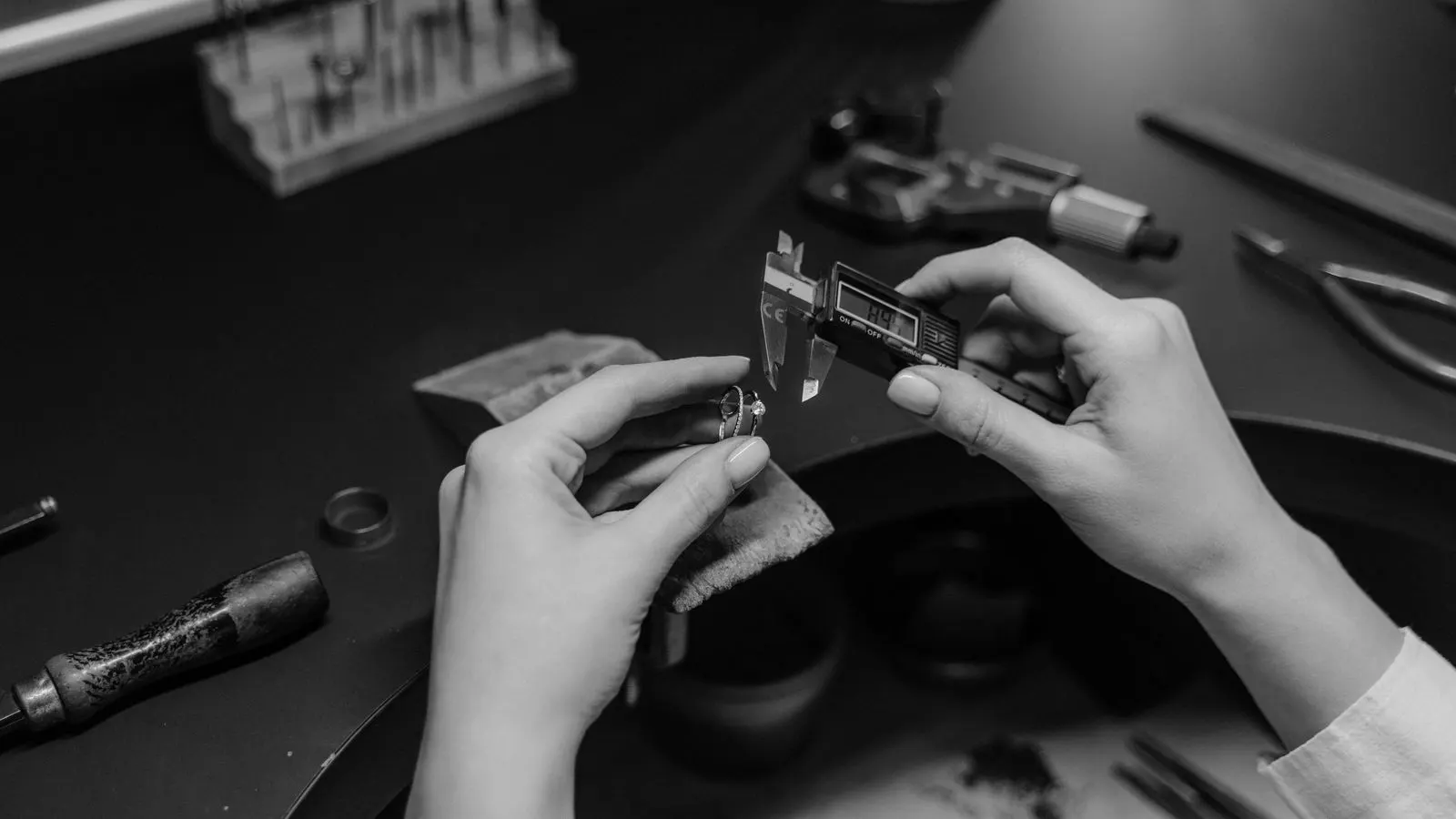
| Measurement equipment | Surface roughness testers, CMMs, optical comparators | Ensures the finish is measured, not guessed |
| Material expertise | Specific experience with your alloy | Prevents damage from incorrect finishing methods |
| Inspection documentation | Finished part reports with texture data | Creates a traceable record for quality audits |
| Sample program | Ability to produce a trial part before production | Allows you to verify the finish before committing |
A provider with strong in-house capability is usually faster. If they outsource, ask who does the work. Ask how they inspect the part after it returns. Outsourcing a finish to a third party can introduce variation. The foundry is still responsible for the final part.
Material expertise is often overlooked. Finishing a cast aluminum part is different from finishing a cast steel part. Aluminum can be scratched easily. It can also work harden if not handled correctly. Steel can be ground to a fine finish, but it requires specific wheel setups. A provider that does not know the difference will damage the part or fail to meet the finish specification.
Measurement equipment is non-negotiable. If a provider cannot measure the finish, they cannot guarantee it. They can only hope. Ask to see the equipment. Ask how often it is calibrated.
Inspection documentation is a sign of maturity. A professional provider will keep records. These records should link the casting defects to the finish result. If the casting had a porosity defect, the finish method may have masked it or exposed it. This information is valuable for future casting design.
The Sample and Trial Phase
Do not start production without a sample. The sample is the contract. It defines the finish. It defines the process. It defines the acceptance criteria.
Ask for a trial part. This part should be the same material and the same geometry as the production part. It should go through the same casting and finishing process.
Inspect the sample yourself. Do not rely on the provider’s report. Use your own surface roughness tester if you have one. If you do not, take the sample to a third-party lab.
Check the flat areas. Check the fillets. Check the thin walls. The finish will vary across the part. The specification must account for this. A Ra value of 1.6 micrometers on a flat area is not the same as a Ra value of 1.6 micrometers on a curved fillet.
If the sample fails, do not blame the provider immediately. Look at the specification. Is the finish achievable with the current casting design? Sometimes a small fillet radius change can make the finish easier to achieve. Sometimes a different casting material can help.
The sample phase is where problems are found. It is cheaper to fix a problem on a sample than on a production batch.
Common Mistakes in Finish Selection
Buyers make a few consistent mistakes when selecting surface finish investment casting services.
- Specifying a finish that is not manufacturable. A very fine finish on a complex part with thin walls is difficult. It requires specialized tooling and time. If the finish is not achievable, the part will fail.
- Ignoring the casting defects. A finish cannot hide a major casting defect. If the casting has porosity or shrinkage, the finish will be poor. Fix the casting first.
- Not defining the inspection method. “It looks good” is not an inspection method. Define how the finish will be measured.
- Choosing the cheapest provider. Finish quality is a skill. It requires experienced operators. A low-cost provider may not have the skilled labor to deliver the finish.
- Not updating the specification. If you change the part design, the finish requirement may change. Update the specification. Do not assume the old finish will still apply.
Decision Checklist
Before signing a contract, confirm these points.
- The finish requirement is defined with a specific number or standard.
- The provider has the equipment to measure the finish.
- The provider has experience with your specific material.
- The provider can produce a sample part.
- The provider will provide a finish report with each batch.
- The contract includes a penalty for finish failure.
- The inspection method is agreed upon in writing.
The checklist is a tool. It is not a substitute for judgment. Use it to ensure you are asking the right questions. It will help you avoid common pitfalls. It will help you select a provider that can deliver the finish you need.
The surface finish investment casting process is a skill. It is not a standard commodity. A provider with the right equipment and the right expertise will deliver a consistent result. A provider without these capabilities will deliver a variable result. The difference is in the details. The details are in the specification, the sample, and the inspection report.
Select a provider that treats the finish as a critical process. Select a provider that measures, documents, and repeats. Select a provider that understands the trade-offs between finish quality, lead time, and cost. The right provider will be a partner in your quality process. The wrong provider will be a source of rework and cost.
The choice is yours. Make it based on evidence. Make it based on a sample. Make it based on a clear specification. The finish is not a cosmetic detail. It is a functional requirement. Treat it as such.
Frequently asked questions
How do I specify surface finish for a complex casting?
Specify the finish for flat areas and for curved areas separately. Use a measurement method for each area. Define the Ra or Rz value for each zone.
Can I outsource finishing to a third party?
Yes, but the foundry is still responsible for the final part. Ensure the third party is qualified and that the foundry inspects the part after it returns.
What is the difference between grinding and polishing?
Grinding removes material with abrasive wheels to create a uniform surface. Polishing removes material with soft tools and fine abrasive to create a reflective or satin finish.
How do I verify the finish on a sample?
Use a surface roughness tester. Measure the flat areas and the curved areas. Compare the results to the specification. Do not rely on visual inspection alone.
What happens if the finish fails?
The part is rejected. The provider must rework the part or replace it. The cost and lead time for rework are usually covered by the provider if the specification was clear.