Explainer: Investment Casting for Complex Medical Parts
Investment casting creates intricate medical device geometries with fine surface finish and tight dimensional control. It supports complex internal structures and surface requirements that other methods struggle to meet, making it a standard choice for complex implants and surgical tools.
- Investment casting handles complex medical geometries with thin walls, internal passages, and fine surface detail.
- It supports multiple casting materials, including stainless steels, titanium, and cobalt-chromium alloys.
- Sourcing decisions depend on surface finish, tolerance, post-process needs, and material certification.
- A worked example shows how a surgical implant may require a specific alloy, finish, and inspection path.
- Buyers should ask casters about pattern design, investment, heat treatment, and final inspection records.
Why medical device parts push casting methods to their limits
Medical device casting often requires geometries that are hard to make by standard machining or simple sand casting. A surgical instrument may have a hollow handle, a narrow lumen, a thin blade, and a textured surface for grip. An implant may have small ports, ribs, or a patterned outer surface. The part must hold those features, pass inspection, and meet material requirements. Investment casting is the method that best fits that combination.
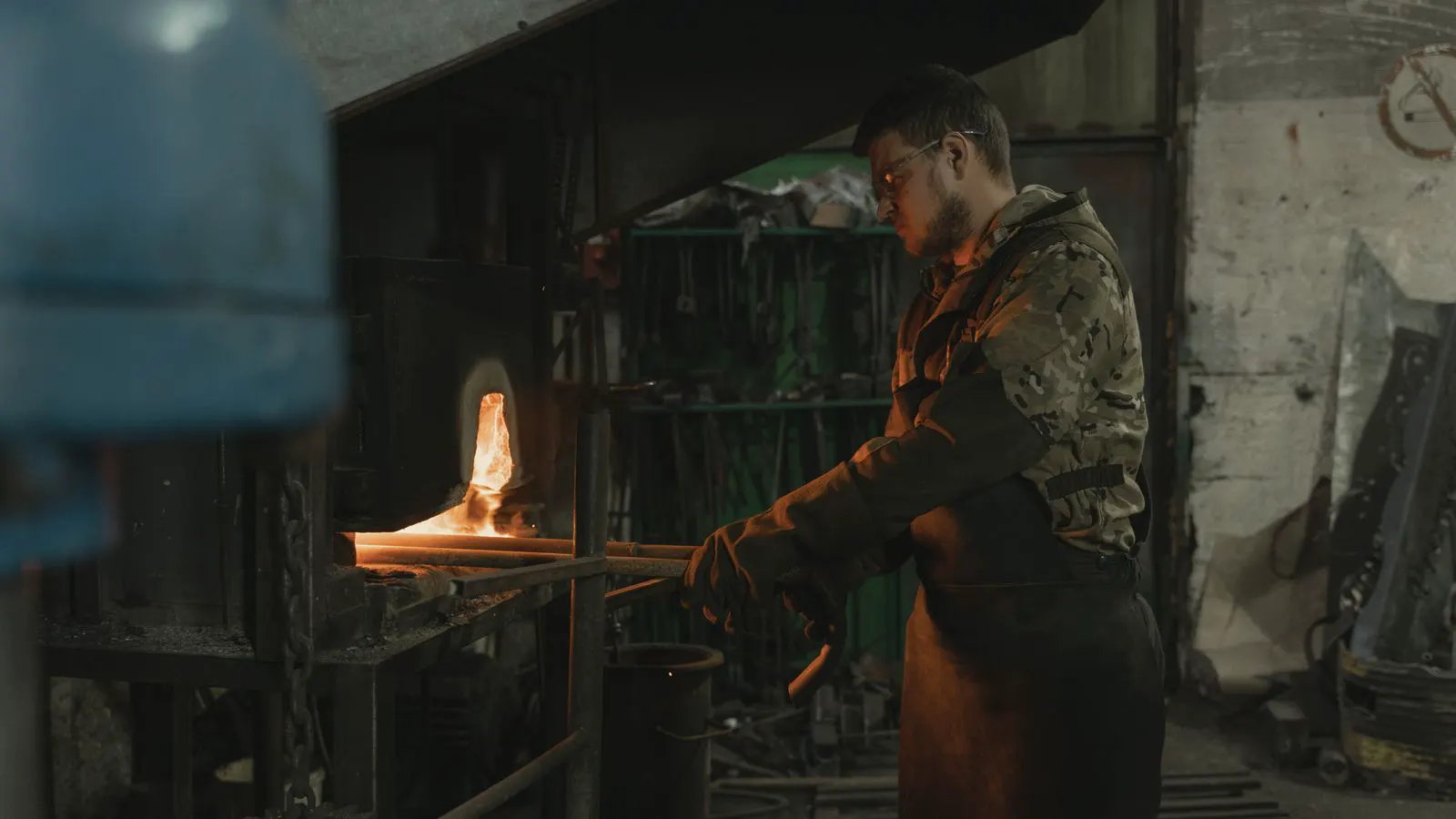
The process starts with a pattern, usually made from wax, resin, or a similar material. The pattern is coated with a ceramic investment, which forms a mold shell. The wax is removed by heat, leaving a cavity shaped exactly like the part. Molten metal is then poured into the shell. The result is a part with fine detail, a smooth surface, and dimensions that can be held closely to the pattern.
For a buyer, the main question is not whether investment casting works. It does. The question is whether the right method, material, and post-process path match the part. That is where the real sourcing decisions begin.
What makes investment casting well suited to medical geometries
The key advantage is detail retention. The ceramic shell is dense and fine. It does not have the coarse grain structure of a sand mold. That allows small features to survive the pour. A thin wall can stay open. A small internal passage can form without clogging. A fine surface texture can be reproduced from the pattern.
There is also control over internal structure. Some medical parts need hollow sections to reduce weight or improve fit. Investment casting can produce those hollow areas without leaving internal sand inclusions. It can also support internal ribs, channels, or thin webs that would be difficult to machine or difficult to hold in a sand mold.
Surface quality is another reason. Many medical devices need a smooth surface to reduce friction, improve fit, or meet biocompatibility expectations. Investment casting gives a cleaner starting surface than sand casting. That does not remove the need for finishing, but it reduces the amount of material removal required. For a buyer, that matters for lead time, cost, and the risk of surface defects.
How material choice changes the casting decision
Medical device casting uses several alloys, and the choice affects the whole process. Stainless steels are common for surgical instruments and implants. They offer corrosion resistance, strength, and a well-understood heat treatment path. Titanium and cobalt-chromium alloys are used in implantable and high-wear applications where specific strength, corrosion resistance, or biocompatibility is required.
The material choice affects pouring, investment, and heat treatment. Different alloys have different melting behavior and different sensitivity to inclusions. Some require careful control of the investment to avoid surface defects. Some need a specific heat treatment to reach the required hardness, corrosion resistance, or mechanical properties.
For sourcing, this means the buyer should not specify only the part. The buyer should also specify the material, the heat treatment, the surface condition, and the inspection records required. A stainless instrument and a titanium implant may both be investment cast, but the process controls, certifications, and final checks are not identical.
How investment casting differs from sand and other methods
Investment casting is often compared with sand casting because both form a mold and pour molten metal. The difference is the mold material and the level of detail. A sand mold is made from granular sand. It is economical and works well for larger parts. It can produce good parts, but it generally does not hold fine detail as well as a ceramic shell.
For medical device casting, that difference matters. A sand mold may produce a part with a thicker wall, a less smooth surface, or a feature that is slightly larger than intended. That may be acceptable for a turbine blade or a structural component. It is less acceptable for a surgical tool or an implant where fit, function, and surface condition matter.
Additive manufacturing is another method that can produce complex medical parts. It is useful for very complex internal structures and custom geometries. It is not always the best choice for every medical casting application. Investment casting remains a strong option when the part needs a specific alloy, a smooth surface, and a production path that is well understood.
The table below shows how the methods compare for medical device needs.
| Method | Detail level | Surface finish | Material flexibility | Typical medical use |
|---|---|---|---|---|
| Investment casting | High | Smooth, often close to final | Broad, including stainless, titanium, cobalt-chromium | Implants, surgical instruments, small complex parts |
| Sand casting | Moderate | Rougher, needs more finishing | Broad, often higher carbon or high-temperature alloys | Large structural or lower-detail parts |
| Additive manufacturing | Very high | Depends on post-process | Limited to metals compatible with the process | Custom implants, complex lattice structures |
| Machining from bar | Limited by starting shape | Can be very precise | Limited to bar or billet availability | Final precision features, small batches |
No one method wins in every case. The buyer should match the method to the part, not the other way around.
A worked example in plain words
Imagine a medical device buyer needs a small surgical instrument with a curved handle, a narrow cutting blade, and a textured grip area. The part must be made from a stainless steel that resists corrosion during sterilization. The buyer also needs a smooth surface on the blade and a rougher texture on the handle.
The first step is the pattern. The pattern is made to the exact shape of the finished part, including the texture. Because the pattern defines the investment shell, the texture must be built into the pattern correctly. If the pattern is wrong, the cast part will be wrong.
Next, the pattern is coated with investment. The investment builds a thin, dense shell. The wax core inside is removed by heat, leaving a clean cavity. The shell must be strong enough to hold the molten metal without cracking, but thin enough to let the metal flow into fine details.
The stainless steel is melted and poured. The pour must be controlled so the metal fills the blade and handle without trapping air. The solidified part still has investment attached. It is removed in a process called shakeout. The part may now have a rougher surface than desired because the investment leaves a surface condition that is not the final finish.
The buyer then specifies the post-process path. The blade may be ground or polished to a smooth finish. The handle may be textured by a separate process if the pattern texture is not enough. The part may be heat treated to reach the required hardness and corrosion resistance. Finally, the part is inspected. The buyer may require dimensional checks, surface checks, and material certification.
This example shows the point. Investment casting is not just a casting method. It is a chain of decisions. The pattern, the investment, the pour, the shakeout, the finishing, the heat treatment, and the inspection all affect the final part. A buyer who understands that chain can ask better questions and avoid costly surprises.
What buyers should ask before sourcing a medical casting
When sourcing investment castings for medical device casting, the buyer should start with the part and the process, not with the supplier. The first question is whether the geometry is realistic. Some features are too thin, too sharp, or too small to form cleanly. A good caster will tell you that early.
The next question is material. The buyer should confirm the alloy, the heat treatment, and the required mechanical properties. If the part is implantable, the buyer should also confirm the biocompatibility requirements and the documentation needed.
The third question is surface. The buyer should say what the surface needs to be. Does it need a polished finish? A textured grip? A certain roughness? Does it need a coating? The surface requirement should be written into the drawing or the specification, not left to assumption.
The fourth question is inspection. The buyer should decide what checks are required. Dimensional inspection, surface inspection, material certification, and heat treatment records are common. For regulated medical devices, the buyer may also need traceability and lot records.
The final question is lead time. Investment casting is not always the fastest method. It may require pattern making, investment, heat treatment, and finishing. The buyer should build the lead time into the plan. A part that is technically possible but delayed by a missing material certification is not a good part.
Common mistakes that delay medical casting projects
The first mistake is specifying the part without specifying the process. A buyer may say, “I need this implant.” That is not enough. The buyer needs to say the material, the finish, the tolerances, the heat treatment, and the inspection path.
The second mistake is ignoring the pattern. The pattern is the master. If the pattern has a sharp corner that the metal cannot flow into, the cast part will have a defect. If the pattern has a texture that the investment cannot hold, the finished part will not match.
The third mistake is underestimating finishing. Investment casting gives a good surface, but it is not always the final surface. The buyer must plan for grinding, polishing, texturing, or coating. That work takes time and skill.
The fourth mistake is not asking for records. For medical device casting, the buyer may need material certificates, heat treatment records, and inspection reports. If those records are not planned, the project can stall at the end.
The fifth mistake is choosing the cheapest option without considering the total cost. A low casting price may come with a longer lead time, more rework, or more finishing. The buyer should compare the total path, not just the unit price.
How investment casting fits into a broader medical supply chain
Investment casting is one link in a longer chain. The buyer may need a design review before casting. The buyer may need a supplier that can provide certified materials. The buyer may need a finishing partner. The buyer may need a supplier that can provide traceability for each lot.
The method itself is stable. It is not a new trend. It has been used for precision parts for a long time. What changes is the pressure on suppliers to provide better documentation, faster turnaround, and clearer communication. For medical device casting, that pressure is higher than in many industrial markets.
A supplier that understands the full path from pattern to final inspection is more useful than a supplier that only casts. The buyer should look for a partner who can explain the process, identify risks early, and provide the records needed for the device.
Investment casting remains a preferred method for complex medical parts because it matches the requirements of the industry. It provides detail, surface quality, material flexibility, and a path to certified parts. For a buyer, the value is in the process control and the documentation, not just the casting itself.
Frequently asked questions
Why is investment casting preferred for intricate medical device geometries?
Investment casting can reproduce fine details, thin walls, and complex internal features in a smooth ceramic shell. That makes it well suited to surgical instruments and implants where fit and surface condition matter.
What materials are commonly used for medical device casting?
Stainless steels, titanium, and cobalt-chromium alloys are common. The choice depends on corrosion resistance, strength, biocompatibility, and heat treatment requirements.
How does investment casting differ from sand casting for medical parts?
Investment casting uses a fine ceramic shell and holds detail and surface finish better than sand casting. Sand casting is more economical for larger parts but is less suited to fine medical features.
What post-process steps are usually needed after investment casting?
Common steps include shakeout, grinding, polishing, texturing, heat treatment, and inspection. The exact path depends on the part and the final surface requirement.
What documentation should a buyer request for medical device casting?
A buyer should request material certificates, heat treatment records, dimensional inspection reports, and surface inspection records. Traceability and lot records may also be required for regulated devices.