Outlook: Resilience in Global Casting Supply Chains
Geopolitical friction and logistics volatility now demand a more defensive casting strategy. Buyers should prepare by diversifying suppliers, integrating digital data, and securing regional partners to maintain stable delivery of high-complexity parts.
- Shift from single-source dependency to a tiered supplier network that balances cost with delivery certainty.
- Invest in digital traceability so procurement teams can monitor lead times and quality without manual reporting delays.
- Evaluate regional foundry capacity to reduce exposure to long-haul shipping risks and border delays.
- Standardize documentation across suppliers to speed up qualification and reduce administrative overhead.
- Build buffer stock for mission-critical components to protect production schedules during disruptions.
How Geopolitical Friction Changes Casting Procurement
Buyers are no longer treating geopolitical risk as a distant concern. Tariff changes, export controls, and regional trade disputes directly affect the cost and availability of raw materials and finished castings. For investment casting, the impact is felt in two places: the metal itself and the finished part.
Aluminum and nickel, common in aerospace and energy castings, often face trade restrictions that can alter landed costs quickly. A foundry in one region may source from a domestic supplier with stable pricing, while a competitor in another region imports the same metal from a third country with higher shipping costs and longer transit times.
Procurement teams must now model these variables before signing contracts. A quote that looks competitive on the surface may carry hidden risks in the supply chain. The question is not just what a part costs, but where every component of that cost originates.
What Logistics Disruptions Mean for Lead Times
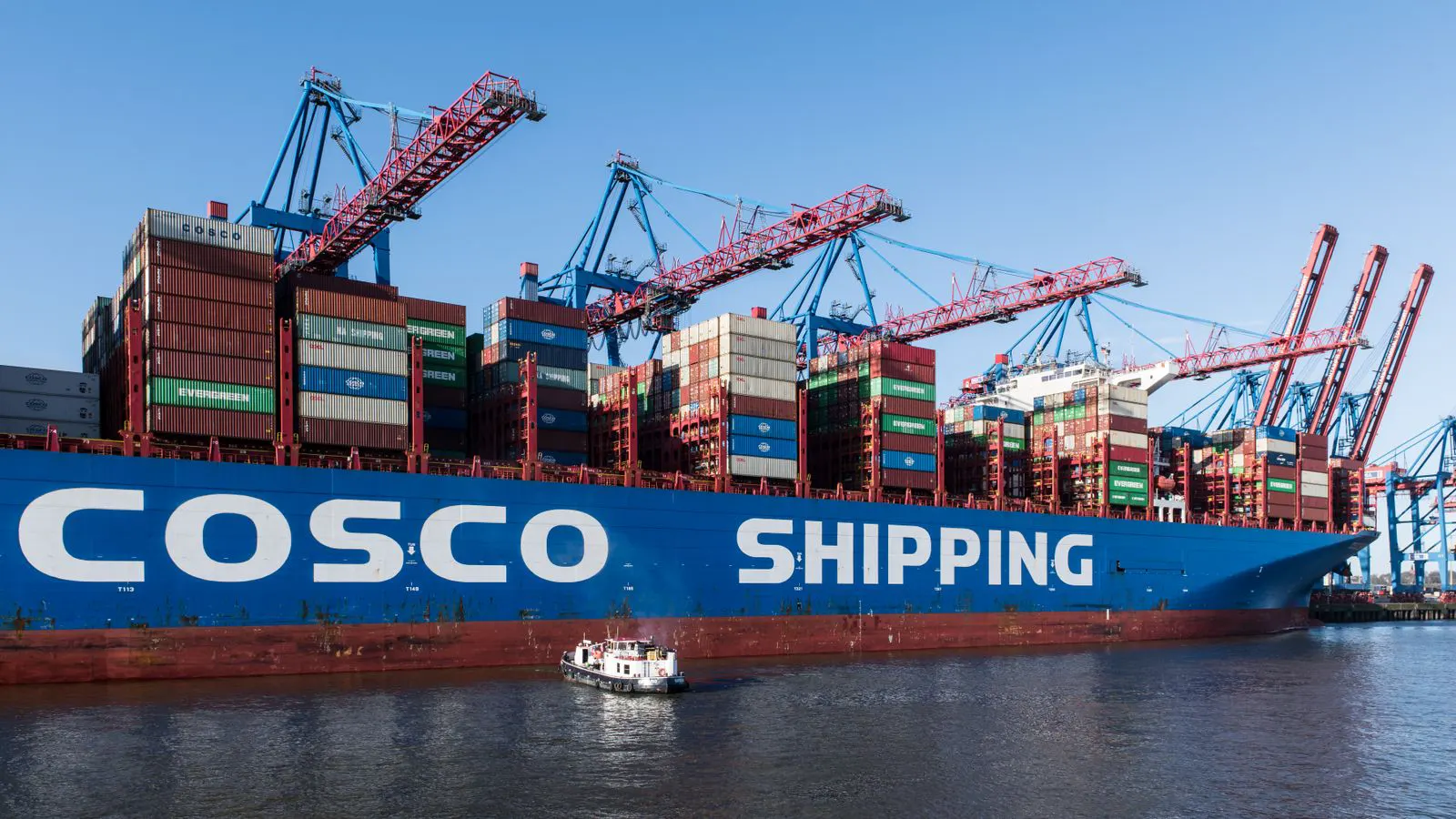
Shipping bottlenecks are not temporary anomalies. They are a persistent feature of global manufacturing. Container availability, port congestion, and inland transport capacity all influence when a casting reaches the customer.
For investment casting, the process is already multi-stage. Pattern making, core manufacturing, investment, pouring, and finishing each take time. Add a two-week delay at a port, and the entire downstream schedule shifts.
Buyers should treat logistics as part of the core manufacturing process. When qualifying a foundry, ask about their typical transit times and backup transport options. A supplier with a strong relationship with a regional freight forwarder can deliver more reliably than one that relies on spot market rates.
How to Build a Tiered Supplier Network
Single-sourcing is risky in volatile markets. A tiered supplier network allows buyers to balance cost, quality, and delivery speed without overextending their management resources.
A common structure looks like this:
- Primary supplier: Handles 60 to 70 percent of volume. This is the main production partner with established quality systems and predictable lead times.
- Secondary supplier: Handles 20 to 30 percent of volume. This partner provides backup capacity and helps keep production running if the primary supplier faces issues.
- Tertiary supplier: Handles 5 to 10 percent of volume or serves as a long-term development partner. This supplier may be in a different region to reduce geopolitical exposure.
The goal is not to manage five or six foundries. It is to have two or three partners who can cover different scenarios. A primary supplier in North America, a secondary in Europe, and a tertiary in Asia might reduce exposure to a single regional disruption.
Why Regional Sourcing Gains Importance
Long-haul shipping is not always the most efficient path. For time-sensitive parts, regional sourcing reduces transit time and gives buyers more control over the delivery window.
This shift does not mean abandoning global sourcing. It means recognizing that some parts are best served by local capacity. A medical device manufacturer, for example, may source routine production in a distant region to keep costs low, but keep a local partner for urgent prototypes or small-batch replacements.
Regional sourcing also simplifies quality control. Shorter transit times mean less chance of damage in transit. It also makes it easier for engineering teams to visit the foundry and review the process in person.
How Data Sharing Improves Visibility
Modern supply chain resilience depends on information flow. If a foundry cannot provide real-time or near-real-time data on order status, the buyer is flying blind.
Digital data sharing allows procurement teams to track orders from pattern release to final inspection. It also supports early detection of problems. If a foundry reports a core manufacturing delay, the buyer can adjust their production schedule before the part is late.
This approach requires standardization. Each foundry may use different terminology or software. The buyer should ask about the foundry’s ability to provide structured data exports, such as order status updates or quality reports in a common format.
What to Prepare in Your Supplier Qualification
The qualification process should reflect the new risk environment. A standard quality audit is not enough. The buyer needs to understand the foundry’s supply chain structure and its exposure to external disruptions.
Key areas to evaluate include:
| Evaluation Area | What to Look For | Why It Matters |
|---|---|---|
| Material Sourcing | Where does the foundry source its raw metals? | Identifies exposure to trade restrictions or price volatility. |
| Logistics Partners | Who handles shipping, and are there backup options? | Reduces risk of delays at ports or on land transport. |
| Digital Reporting | Can the foundry provide structured order status data? | Enables real-time tracking and early problem detection. |
| Production Capacity | Does the foundry have spare capacity or flexible scheduling? | Allows the buyer to increase volume during peak demand. |
| Geographic Diversification | Does the foundry source materials or subcomponents from multiple regions? | Reduces dependence on a single political or economic zone. |
The goal is to build a supplier relationship that is transparent and resilient. A foundry that can explain its supply chain and offer alternatives when needed is more valuable than one that simply delivers on time when everything goes smoothly.
How to Prepare for the Next Procurement Cycle
The coming years will test casting buyers. Geopolitical tensions will persist, and logistics will remain variable. The winners will be those who plan ahead.
Start by mapping your current supply chain. Identify which parts have single sources, which have long transit times, and which are most critical to production. Then build a plan to diversify those areas.
The first step is simple. Talk to your existing foundries about their supply chain structure. Ask about their material sourcing, logistics partners, and backup options. Most foundries will be happy to discuss these topics, especially if you frame it as a mutual risk reduction effort.
The second step is to identify potential secondary suppliers. Do not wait for a crisis to find a new foundry. Qualify one or two partners in a different region, even if you do not place production orders with them immediately. Having a qualified backup is far better than scrambling to find one when your primary supplier is overwhelmed.
The third step is to standardize documentation. Use the same quality requirements, data formats, and reporting templates across all suppliers. This reduces the administrative burden and makes it easier to compare performance.
Finally, build buffer stock for your most critical parts. Not every component needs a safety stock, but the parts that stop your production line do. A small buffer can protect your schedule when a shipment is delayed.
How to Measure Supply Chain Resilience
Resilience is not a one-time achievement. It is an ongoing practice. Buyers should track a few key metrics to understand how well their supply chain is holding up.
Delivery performance is the most obvious one. Track on-time delivery rates for each supplier and each region. A small drop in on-time performance is an early warning sign.
Lead time variability is another useful metric. If a foundry typically delivers in eight weeks but sometimes takes ten, that variability is a risk. Track the range of lead times over several orders to understand the consistency.
Quality escape rate also matters. If a supplier delivers a part that fails inspection, that is a cost and a delay. A resilient supplier has a low quality escape rate and a clear process for addressing defects.
Finally, track your supplier concentration. If one foundry supplies more than 50 percent of your volume, you have a concentration risk. Aim to reduce that number over time by qualifying secondary suppliers and shifting some volume to them.
These metrics do not need to be perfect. They just need to be consistent. A simple spreadsheet that you update monthly is better than no tracking at all.
How to Engage Foundries as Partners
The most resilient supply chains are built on relationships, not just contracts. Foundries that are treated as partners are more likely to share information early and work with you to solve problems.
This means communicating regularly, not just when there is an issue. Share your production schedule, your capacity constraints, and your upcoming product launches. When a foundry understands your business, it can plan its capacity better and offer you alternatives when needed.
It also means being flexible. If a foundry suggests a different material, a different finishing process, or a different delivery schedule, listen. Sometimes the solution to a supply chain problem is not in the casting itself, but in how the part is specified or delivered.
The goal is to build a relationship where both sides benefit from stability. A foundry that knows it has a long-term customer will invest in its supply chain and its people. A buyer that trusts its foundry will reduce its risk and improve its production efficiency.
The future of casting procurement is not about finding the cheapest supplier. It is about finding the most reliable partner. In a world of geopolitical uncertainty and logistics volatility, that is the real value.
Frequently asked questions
How can I reduce my exposure to geopolitical risks in casting procurement?
Diversify your supplier base across different regions and qualify secondary suppliers. Also, track the origin of raw materials to identify potential trade restrictions.
What is the benefit of regional sourcing for investment casting?
Regional sourcing reduces transit time and gives you more control over delivery windows. It also makes it easier to conduct on-site quality audits and respond to urgent changes.
How much should I buffer for critical castings?
The buffer depends on your part criticality and your supply chain risk. For mission-critical components, a small buffer of two to four weeks of production is a common starting point.
Do I need a digital system to track my supply chain?
A simple spreadsheet can work for small operations. For larger programs, a digital system that integrates order status, quality reports, and logistics data is more effective.
How do I qualify a secondary supplier without placing production orders?
Perform a standard qualification audit, review their quality system, and run a small pilot batch. This gives you confidence in their capability without committing to full production.