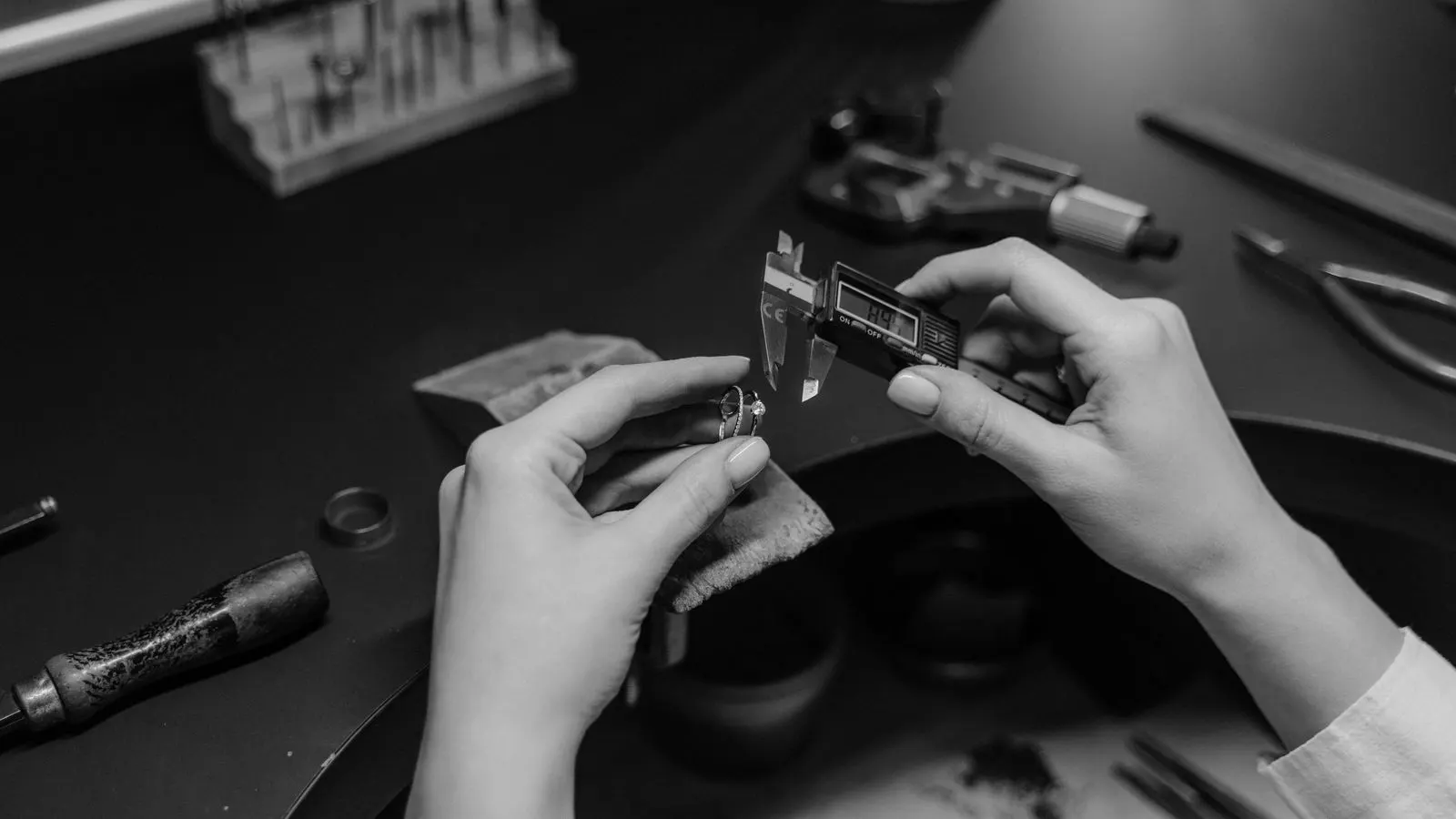
Comparison: Casting Tolerances and Surface Finishes
Investment casting tolerances and surface finish requirements dictate post casting finishing, dimensional accuracy, and cost. Tighter tolerances and smoother textures demand more machining and polishing. Selecting the right combination early prevents rework, delays, and unnecessary spend on a finished part.
- Tolerance and finish requirements must be set before the mold is built to control cost and lead time.
- Tighter dimensional accuracy reduces the need for secondary machining but raises the risk of mold rejection.
- Surface texture depends on mold material, coating, and part geometry, not just the nominal tolerance class.
- Post casting finishing operations vary significantly based on whether the part needs polishing, machining, or only deburring.
- Clear specification documents prevent disputes over acceptance and reduce the need for rework.
How tolerance and finish requirements affect production
The line between a cast part and a finished component is drawn by tolerance and finish. A buyer who specifies only a drawing without clear tolerance and finish notes leaves the foundry to guess. That guesswork usually shows up in the form of extra machining, rejections, or a part that looks wrong even if it fits.
Investment casting produces parts that are already close to final shape. The mold captures the geometry, and the core and shell form the internal and external surfaces. The level of dimensional accuracy depends on the mold material, the wax or resin used, and the shrinkage compensation built into the pattern. The surface texture depends on the mold surface quality, the coating, and how the metal solidified against the shell.
A typical automotive valve body, for example, may require a tolerance of a few hundredths of an inch on bore diameters and a smoother surface on the mating face. A decorative bracket may accept a looser tolerance but require a polished finish. The two parts look different in the production plan because the finishing route is different.
What drives dimensional accuracy
Dimensional accuracy is the difference between the as cast size and the drawing size. It is not a single number. It changes with part size, material, and feature location. A long shaft has more room to deviate than a small boss. A thin wall cools faster and shrinks differently than a thick section.
The main drivers are:
- Mold material.
- Pattern shrinkage.
- Part geometry.
- Casting temperature.
- Cooling rate.
A foundry that controls these variables tightly can hold tighter tolerances. The cost rises as the tolerance tightens. The mold may need to be machined to a higher precision. The wax or resin may need to be stabilized. The core and shell may need to be checked with CMM or optical scanning before release.
What drives surface texture
Surface texture is the visible and tactile quality of the casting surface. It is often measured with roughness values, but in practice buyers look at the part and decide if it is acceptable. A rougher surface may show flow marks, chills, or a grainy pattern. A smoother surface shows a finer, more uniform texture.
The surface texture in investment casting is shaped by:
- Mold surface finish.
- Coating quality.
- Part orientation.
- Material.
- Pouring conditions.
A part that sits horizontally in the mold may develop a different surface than one that sits vertically. Gravity and the pour direction matter. A smooth mold surface does not guarantee a smooth casting if the coating is uneven or the metal temperature is off.
Comparison of tolerance and finish approaches
The table below compares four common approaches to specifying tolerance and finish for investment castings. The goal is to match the requirement to the part function, not to chase the tightest possible tolerance.
| Option | Best for | Limitations |
|---|---|---|
| Standard tolerance with basic finish | Non critical parts, brackets, housings, decorative items | May require deburring and light machining. Surface texture can vary. |
| Tight tolerance with standard finish | Functional parts that need a machined face or bore | Higher mold cost. More rework if the mold is out of control. |
| Standard tolerance with polished finish | Visible parts, consumer products, fixtures | Polishing can remove material and shift tolerances. Requires careful inspection. |
| Tight tolerance with polished finish | High precision visible parts, aerospace or medical applications | Highest cost. Longest lead time. Highest rejection risk. |
When to pick standard tolerance with basic finish
This is the default for many parts. The part does not need to be machined after casting. It is assembled or coated. The buyer accepts a rougher surface because the final appearance is hidden. The cost is lower, and the lead time is shorter. The risk is low because the part has a margin.
When to pick tight tolerance with standard finish
Use this when the part will be machined on a few critical faces. The foundry holds the critical dimensions close, and the buyer removes the rest. The foundry does not need to polish the entire part. The cost is higher than standard tolerance, but it is lower than a fully polished finish. The buyer must specify which faces are critical and which are not.
When to pick standard tolerance with polished finish
Use this when the part is visible but does not need tight dimensions. The buyer wants a smooth surface for aesthetics or to reduce friction. The foundry polishes the part after casting. The cost is higher than a basic finish, but the tolerance is still standard. The buyer must accept that polishing may change the size.
When to pick tight tolerance with polished finish
Use this when both dimensions and appearance matter. The part is visible and must fit precisely. The cost is the highest. The lead time is the longest. The risk is the highest. The foundry must control every step. The buyer must inspect the part carefully and define acceptance criteria.
How post casting finishing changes the plan
Post casting finishing is not a single step. It is a sequence of operations. A part may need deburring, grinding, polishing, or machining. Each operation changes the surface and the size. The buyer must plan for this.
A part with a standard finish may only need deburring. A part with a polished finish may need wet or dry polishing. A part with a tight tolerance may need machining on a few faces. The sequence matters. If you polish first and then machine, you remove the polish. If you machine first and then polish, you may ruin the machined surface.
The buyer should specify the finish by area. Not every part needs the same finish on every face. A mating face may need a smooth finish, while a non critical face can be rougher. This saves cost and time.
How to verify the requirement on the drawing
The drawing is the contract. If the tolerance and finish are not written, the foundry uses a default. That default may not match the buyer needs. The drawing should list:
- General tolerance.
- Feature specific tolerance.
- Surface texture requirement.
- Finish requirement by area.
- Inspection method.
A note that says “as shown” is not enough. The buyer should state the tolerance class, the surface roughness value, and the finish type. The inspection method should state how the part will be checked. CMM, optical scanning, or visual.
When the trade off is worth it
The trade off between tolerance and finish is a cost decision. The buyer must ask if the part will function and look right. If the answer is yes, the standard tolerance with basic finish is enough. If the part is visible, the polished finish may be needed. If the part fits a critical assembly, the tight tolerance may be needed.
The buyer should not specify the tightest tolerance and the smoothest finish by default. That increases cost and lead time without adding value. The buyer should specify the minimum requirement that meets the function and appearance.
The foundry should be involved early. The foundry can tell if the tolerance is achievable with the mold. The foundry can suggest a finish that is easier to achieve. The buyer can adjust the drawing before the mold is built.
The cost of a mistake is high. A part that is rejected after finishing is a loss. A part that is too rough for the buyer is a loss. A part that is too tight for the function is a loss. The buyer should define the requirement clearly and inspect the first article carefully.
The decision is not about the best possible part. It is about the right part for the application. The buyer should match the tolerance and finish to the function, the appearance, and the budget. The foundry should support that decision with data and experience.
The final part should be the result of a clear specification, a controlled process, and a fair inspection. The buyer and the foundry should agree on the acceptance criteria before production starts. That agreement prevents disputes and keeps the project on track.
The part that is built well is the part that is built to the right requirement.
Frequently asked questions
What is the typical tolerance for investment castings?
Tolerance depends on part size, material, and feature location. A standard casting may accept a tolerance of a few hundredths of an inch, but tighter tolerances are possible with higher cost.
Can I specify a polished finish on a tight tolerance part?
Yes, but it is the most expensive option. Polishing can change the size, so the buyer must define the finish by area and accept the inspection method.
How does surface texture affect assembly?
A rough surface can cause friction, wear, or seal issues. A smooth surface reduces friction and improves seal performance. The buyer should match the texture to the function.
What is the best way to verify a casting tolerance?
Use CMM or optical scanning for critical dimensions. Use visual inspection for surface texture. The buyer should define the inspection method on the drawing.
Can I change the tolerance after the mold is built?
No, not easily. The mold is built to the pattern. Changing the tolerance after the mold is built requires a new pattern or a new mold. The buyer should set the tolerance before the mold is built.