Investment vs Sand: Cost for Thin-Walled Castings
Investment casting typically costs more per unit for thin-walled parts due to pattern complexity and labor, but it delivers better surface finish and dimensional control. Sand casting is cheaper for thicker sections and higher volumes. The right choice depends on wall thickness, tolerance, finish, and production run length.
- Investment casting excels at thin-walled, high-tolerance parts but carries higher per-unit costs from pattern making and intricate wax work
- Sand casting is more economical for thicker sections and larger production runs, though it struggles with fine detail and tight tolerances
- Total cost comparison must include pattern development, mold preparation, labor, rework, and post-processing, not just raw material
- Process selection for thin-walled components often favors investment casting when surface finish and dimensional accuracy drive design
- Hybrid approaches and process optimization can reduce the cost gap for specific applications
Why Thin-Walled Parts Change the Cost Equation
Thin-walled components shift the economics of metal casting. A 2 mm wall thickness behaves very differently from a 10 mm section. Heat transfer, solidification, shrinkage, and surface finish all change. The cost difference between investment and sand casting widens or narrows depending on which of these factors dominates the design.
For a buyer or engineer, the question is not simply which process is cheaper per kilogram of metal. It is which process delivers the part at acceptable quality, within tolerance, and at acceptable total cost. Thin walls create specific risks. They solidify rapidly, which can lock in porosity or incomplete fill. They also shrink more significantly relative to their size, making dimensional control harder. The investment process slows cooling at the part surface, allowing metal to flow deeper into the mold before freezing. Sand cools faster due to higher thermal conductivity, which can help thicker sections but often hurts thin ones.
When a part has a wall thickness under 3 mm, the investment process usually offers better control over flow and finish. When the wall is 6 mm or more, the thermal mass of the section helps sand casting fill and solidify evenly. The choice between the two processes often hinges on these physical realities rather than just the price sheet.
How Investment Casting Drives Up Unit Cost
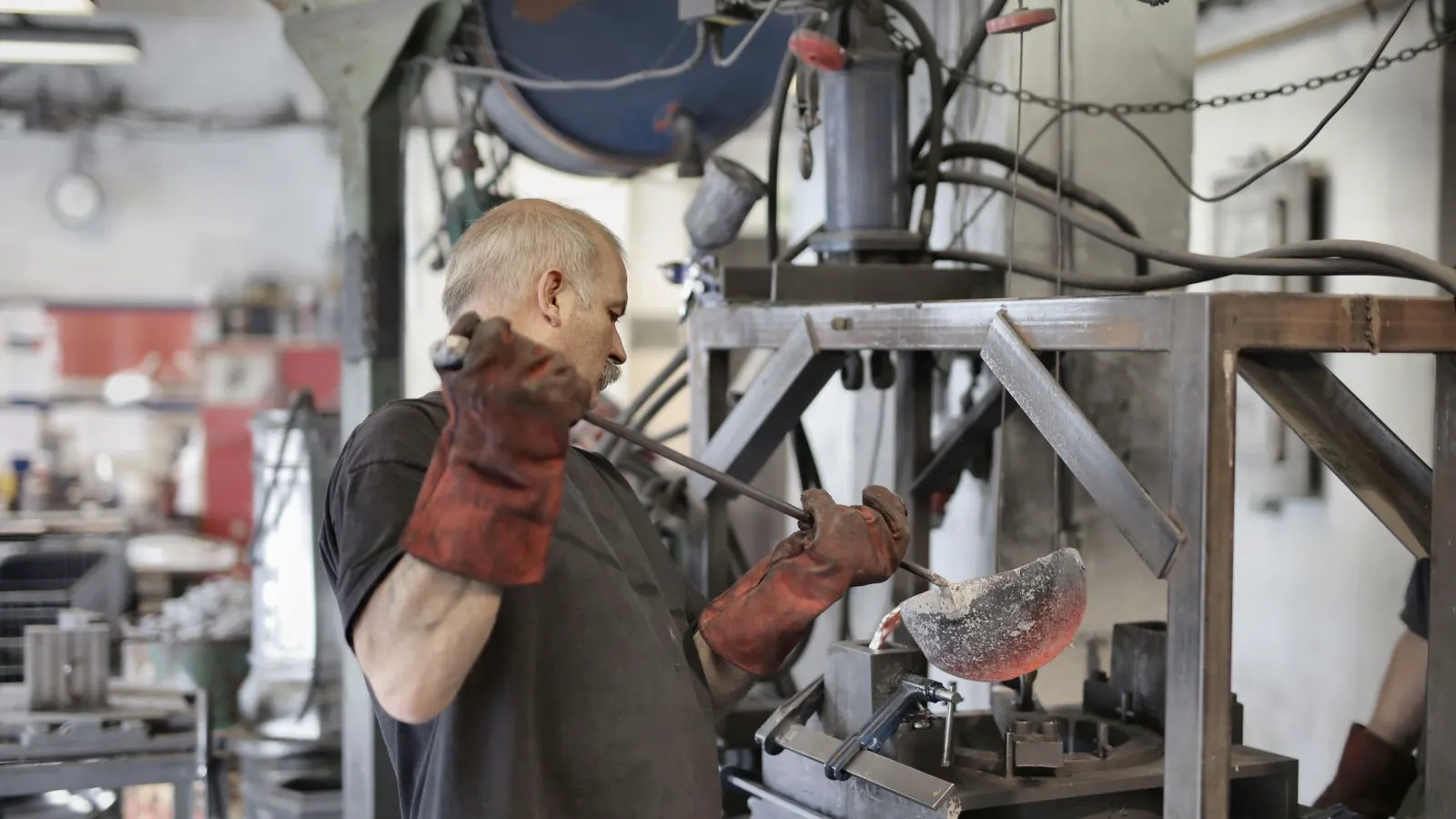
Investment casting uses a wax pattern. The wax is coated in refractory slurry, burned out, and molten metal is poured into the shell. The process produces excellent surface finish and fine detail. It handles thin walls well because the investment shell allows controlled cooling and smooth metal flow.
Costs come from several sources. Wax pattern making is labor intensive and often requires CNC or 3D printing. Pattern design must account for shrinkage, venting, and feeding. Every part requires a mold preparation cycle that is more complex than sand. For small runs, the pattern cost is amortized across few parts, pushing unit price up.
The investment shell preparation adds another layer of cost. The wax is dipped in multiple coats of refractory slurry. Each coat must dry and cure before the next is applied. This creates a lead time and a labor cost that scales with the number of coats required. A part with intricate internal channels may need more coats to prevent slurry leakage or poor surface finish. The burnout phase also requires careful temperature control. If the wax is removed too quickly, the shell can crack or collapse during pouring. If it is too slow, the production cycle lengthens.
Material cost for the investment shell is often overlooked in early budgeting. Refractory materials, binders, and additives contribute to the direct cost of each mold. For low-volume production, this cost is significant per unit. However, for high-volume production, the amortization of pattern and tooling costs can make investment casting competitive if the part complexity justifies the initial setup.
How Sand Casting Controls Cost for Thicker Sections
Sand casting uses a mold, often made from green sand, resin-bonded sand, or cold process sand. The pattern is removed, the mold is closed, and metal is poured. Sand can handle thicker sections and larger parts at lower per-unit cost. Pattern making is often simpler, especially for repeat runs where the sand mold can be reused or the pattern can be a simple wooden or metal form.
The trade-off is detail and finish. Sand casting produces a rougher surface. Thin walls are harder because the mold must fill quickly, and sand grains can create texture and porosity. Tight tolerances are difficult to hold without machining.
Green sand is the most common form used for high-volume production. It is made by mixing sand with clay and water. The mold is formed around the pattern, the pattern is removed, and the mold is closed. This process is fast and inexpensive. However, green sand molds are fragile. They can shift during pouring, leading to dimensional inaccuracies. For thin-walled parts, this fragility is a significant drawback. The mold must support the pressure of the molten metal without deforming. If the wall is too thin, the sand may not provide enough support, leading to bulging or dimensional drift.
Resin-bonded sand offers better strength and detail than green sand. It is formed by mixing sand with a resin that hardens upon exposure to heat or chemicals. This allows for more complex part geometries and tighter tolerances. The cost of resin-bonded sand is higher than green sand, but it is often lower than investment casting for parts that do not require the finest finish. The surface finish is still rougher than investment casting, but it is closer to a machined surface than what green sand can provide.
Cost Comparison for Thin-Walled Castings
The table below compares the two processes across the factors that matter most for thin-walled parts.
| Option | Best for | Limitations |
|---|---|---|
| Investment casting | Thin walls, fine detail, tight tolerances, smooth finish | Higher pattern and labor cost, longer lead time, less flexible for very large parts |
| Sand casting | Thicker sections, larger volumes, lower cost per unit | Rougher surface, limited fine detail, difficulty with very thin walls |
| Lost-wax plus post-machining | High-precision thin-walled parts where machining removes excess | Adds machining cost and may reduce material efficiency |
| Advanced sand with resin-bonded molds | Mid-range detail and moderate wall thickness | Still limited by sand grain size and surface finish |
| Hybrid processes | Balancing cost and quality for specific designs | Requires process engineering and may not be available at all foundries |
When evaluating these options, consider the specific geometry. A thin-walled part with simple geometry may cast well in resin-bonded sand. A thin-walled part with complex internal features will likely require investment casting. The cost difference between the two processes is not just in the metal or the mold. It is in the yield rate. Investment casting typically has a higher first-pass yield for thin-walled parts. Sand casting has a lower yield due to defects like porosity, inclusions, and dimensional inaccuracies. The cost of rework for sand casting can offset the lower initial cost.
Where Investment Casting Wins on Thin-Walled Parts
Investment casting is the default choice when the wall thickness is below a few millimeters and the part must hold fine features. Turbine blades, valve bodies, jewelry, aerospace brackets, and medical components often use this process. The investment shell allows metal to flow into narrow passages without trapping air. The surface finish reduces machining time.
For a 1.5 mm wall with a 0.1 mm tolerance on a critical dimension, sand casting will struggle. The mold may not fill correctly. The surface may have sand texture. Shrinkage in thin sections can cause cold shuts or porosity. Investment casting handles these issues more predictably.
The investment process also offers better control over feeding and venting. The shell is designed to allow metal to flow freely and to feed the part as it solidifies. This reduces the risk of hot spots and shrinkage cavities. In sand casting, feeding is more difficult because the sand mold is less flexible. If the part shrinks during solidification, the sand may not expand to fill the gap, leading to cavities.
Another advantage of investment casting is the ability to produce parts with complex internal geometries. Thin-walled parts often have internal channels or cavities that must be filled without trapping gas. The investment shell is designed to vent these areas effectively. Sand casting can trap gas in internal cavities, leading to porosity and defects. This is especially true for parts with thin walls and high aspect ratios.
Where Sand Casting Can Be Competitive
Sand casting becomes competitive when the “thin wall” is not actually that thin. A 6 mm wall with moderate detail may cast well in sand at a lower cost. If the part will be machined anyway, the surface finish matters less. If the volume is high, the lower pattern and mold cost of sand can outweigh the finish benefit of investment.
Some foundries use resin-bonded sand or cold process sand to improve detail and reduce core issues. These methods narrow the gap with investment casting for parts that do not require the finest finish.
Consider a thin-walled bracket with a wall thickness of 4 mm and a surface finish requirement of 12.5 microns. Investment casting can achieve this finish with minimal post-processing. Sand casting may require grinding or machining to reach the same finish. If the volume is high, the cost of grinding and machining may offset the savings from sand casting. However, if the volume is low and the finish requirement is relaxed, sand casting may be the better choice.
Another factor is material compatibility. Some alloys cast better in sand than in investment. For example, aluminum alloys often cast well in sand due to their low melting point and high fluidity. Investment casting can also handle aluminum, but the process requires careful control of the burnout temperature to prevent damage to the aluminum. For steel and nickel alloys, investment casting is often preferred due to its ability to produce fine detail and tight tolerances.
Total Cost Beyond the Cast
The per-unit cast price is only part of the story. Total cost includes pattern development, mold preparation, labor, rework, post-processing, and inspection. Investment casting may require more quality checks because the process is more sensitive to defects. A single bad mold shell can waste a batch. Sand casting may require more machining to reach final dimensions.
A buyer should ask for a cost breakdown that separates pattern, casting, and post-processing. This makes comparison fair. It also reveals where rework or tolerance changes will hit the budget.
Quality inspection is another cost factor. Investment casting parts often require X-ray or ultrasonic testing to check for internal porosity and defects. Sand casting parts may require similar testing, but the defect rate is generally higher. The cost of inspection and rework can be significant for thin-walled parts. A buyer should factor in the cost of testing and the potential for rework when comparing total costs.
Logistics and lead time also impact total cost. Investment casting has longer lead times due to pattern making and shell preparation. If the part is needed urgently, the cost of expediting investment casting can be high. Sand casting can be faster for repeat runs, but the initial setup may take longer. A buyer should consider the lead time requirement when choosing a process. If the part is needed within two weeks, investment casting may not be feasible. If the part can wait six weeks, investment casting may be the better choice.
Process Selection Guide for Thin-Walled Components
Use the following checklist when comparing investment vs sand casting for a thin-walled part.
- Measure wall thickness. Below 3 mm, investment casting is usually more reliable.
- Check tolerance requirements. Tight tolerances favor investment.
- Assess surface finish needs. Smooth finish favors investment.
- Estimate production volume. High volume can favor sand if the part is not too thin.
- Review material. Some alloys behave better in one process than the other.
- Consider post-machining. If heavy machining is needed, sand may be acceptable.
When applying this checklist, pay attention to the interaction between the factors. A thin wall with a loose tolerance may be acceptable in sand casting. A thick wall with a tight tolerance may require investment casting. The checklist is a starting point, not a definitive rule. The specific geometry and material will influence the final decision.
Another factor to consider is the availability of the foundry. Not all foundries offer both investment and sand casting. Some specialize in one process or the other. A buyer should evaluate the foundry’s capabilities and experience with the specific part. A foundry that has cast similar parts before is more likely to deliver a high-quality result.
Lead Time and Supply Considerations
Lead time is part of cost. Investment casting often has longer lead times because of wax pattern making and investment shell preparation. Sand casting can be faster for repeat runs. For prototyping, 3D printed wax patterns can reduce lead time, but they add pattern cost. For production, established patterns and molds reduce cycle time.
A foundry that can manage both processes may offer the best flexibility. They can test a design in sand, then move to investment if the wall thickness or tolerance demands it.
Lead time is also impacted by supply chain issues. The availability of refractory materials, wax, and other inputs can affect production times. Investment casting requires a steady supply of refractory slurry and wax. Sand casting requires a steady supply of sand and binders. A buyer should ask about the foundry’s supply chain and its ability to meet lead time requirements.
Another consideration is the consistency of lead time. Investment casting has a more predictable lead time because the process is controlled. Sand casting can be faster, but the lead time can vary depending on the complexity of the part and the availability of sand. A buyer should factor in the variability of lead time when planning production.
Common Cost Mistakes
Buyers often underestimate pattern cost. A simple part can have an expensive wax pattern if the geometry is complex or the material is difficult. They also underestimate rework. A thin-walled sand casting may need machining, grinding, or repair, which adds cost.
Another mistake is comparing only the cast price. A $5 investment cast part may become a $12 finished part. A $3 sand cast part may become a $9 finished part after machining. The total cost tells the real story.
Buyers also make the mistake of assuming that the process with the lower initial cost will have the lower total cost. This is not always true. The initial cost of sand casting may be lower, but the cost of rework and post-processing may be higher. The buyer should ask for a total cost estimate, not just a per-unit cast price.
Another common mistake is not considering the quality requirements. A buyer may choose sand casting because it is cheaper, but the part may not meet the quality requirements. This leads to rework or rejection, which increases cost. The buyer should clearly define the quality requirements and ensure that the chosen process can meet them.
When to Choose Investment Casting
Choose investment casting when the thin wall is critical to function, when the part has fine features, when the surface finish must be smooth, or when the tolerance is tight. The higher cost is justified by reduced rework and better first-pass yield.
Investment casting is also the right choice when the part is made from a material that requires high precision. For example, titanium and nickel alloys often require investment casting due to their high melting points and sensitivity to defects. Investment casting provides the control needed to produce high-quality parts from these materials.
When to Choose Sand Casting
Choose sand casting when the wall thickness allows it, when the part will be machined, when the volume is high, or when the budget is tight and the design is forgiving. The lower cost and faster cycle time make it attractive for many industrial components.
Sand casting is also the right choice when the part is large or has a simple geometry. Large parts are difficult to cast in investment casting due to the limitations of the shell. Simple parts do not require the fine detail and tight tolerances that investment casting provides. Sand casting is a good choice for these parts.
Final Decision Framework
The decision comes down to three things. The design, the quality requirement, and the volume. If the design is thin and detailed, investment casting is likely the only reliable option. If the design is thicker and the volume is high, sand casting can win on cost. If the part is in between, ask the foundry for a cost breakdown and a sample.
The final decision should be based on a clear understanding of the trade-offs. Investment casting offers higher quality and better control over thin-walled parts, but at a higher cost. Sand casting offers lower cost and faster production, but with less detail and finish. The buyer should weigh these factors against the specific requirements of the part. A sample part is often the best way to evaluate the trade-offs.
Frequently asked questions
Is investment casting always more expensive than sand casting?
Not always. For very thin, detailed parts, investment casting may cost less overall because it reduces rework and post-processing. For thicker, simpler parts, sand casting is usually cheaper per unit.
Can sand casting make thin-walled parts?
Yes, but with limits. Sand casting can handle thin walls if the design allows good filling and cooling. Below a few millimeters, investment casting is more reliable for fine detail and tight tolerances.
How much does a wax pattern cost?
Cost depends on complexity, material, and method. CNC machined or 3D printed patterns cost more than simple hand-made patterns. A complex thin-walled part can have a significant pattern cost.
Which process gives a better surface finish?
Investment casting gives a smoother surface finish. Sand casting leaves a textured surface from the sand grains, which often requires machining or polishing.
Can I switch from sand casting to investment casting later?
Yes, if the design allows. The same part can often be produced in both processes, but the cost and quality will differ. A foundry can help compare the two options for your specific part.