Outlook: Additive Manufacturing in Casting Alloy R&D
Additive manufacturing is changing how casting alloys are developed by allowing engineers to test complex geometries and new compositions faster. Buyers should plan for shorter trial cycles, tighter traceability, and new qualification methods as these technologies mature in the production environment.
- Additive manufacturing accelerates alloy development by testing complex internal structures that traditional casting cannot produce.
- Buyers must update qualification protocols to accept printed parts as baseline test artifacts for new casting alloys.
- Traceability standards will expand to cover powder chemistry and process parameters, not just raw material mills.
- Design-for-casting teams should integrate additive print data into their material development roadmaps.
- Expect shorter feedback loops between alloy formulation and casting validation through digital twins and rapid prototyping.
The Shift from Trial and Error to Iterative Testing
Investment casting engineers have long relied on trial melts and physical sand or wax patterns to evaluate new compositions. This method works, but it is slow. A single new alloy formulation might require multiple small-scale pours, heat treatments, and non-destructive testing cycles before it reaches full production scale.
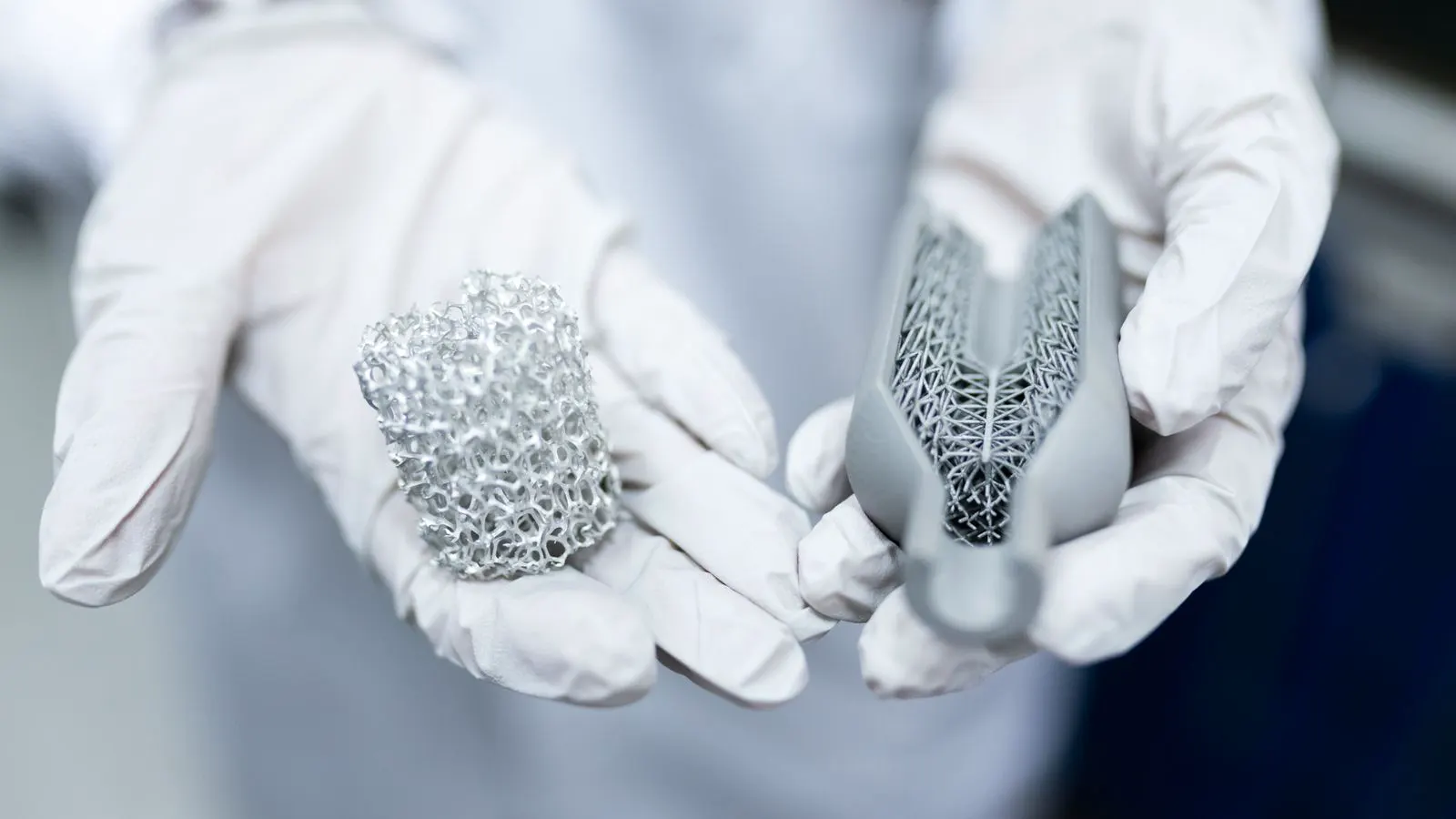
Additive manufacturing has changed the starting point. Engineers can now print test blocks with internal cooling channels, complex lattice structures, or varying wall thicknesses in a matter of hours. These printed parts serve as the initial benchmark for how a new additive manufacturing alloy behaves under thermal stress.
The practical result is a faster feedback loop. When an R&D team identifies a promising composition, they do not wait for a full casting line setup. They print a small test piece, heat treat it, and measure its properties. If the results are acceptable, the team moves the composition to a small investment casting trial. If not, they adjust the chemistry or the print parameters and try again.
This shift reduces the risk of expensive failures. Buyers sourcing cast parts from new alloy programs should expect shorter lead times for initial samples. However, the qualification period for full production acceptance will still require rigorous testing. The difference is that the development phase is now much tighter and more data-driven.
How Additive Printing Changes Alloy Design
Traditional casting alloys are designed to flow easily into molds and solidify without defects. Additive manufacturing alloys, however, are often designed for a different purpose. They are formulated to withstand the high temperatures and rapid cooling rates of the printing process.
This creates a new class of materials. Some of these compositions would be difficult or impossible to cast using conventional sand or investment methods. They might have poor fluidity or high susceptibility to hot cracking when poured.
Engineers can now use these difficult compositions in additive processes to create functional test parts. For example, a high-temperature superalloy with a complex crystal structure might be printed as a small coupon. Engineers then study how this material responds to thermal cycling. If the material performs well, they can attempt to cast it using investment casting, knowing they have a better understanding of its behavior.
This approach allows for the development of alloys with properties that were previously out of reach. Buyers should look for suppliers who can demonstrate their ability to handle complex compositions through additive methods before moving to full casting.
The Impact on Casting Material Development
Casting material development is no longer a linear process. It is now an iterative cycle that integrates digital design, additive manufacturing, and traditional casting.
- Formulation: R&D teams select base metals and alloying elements to target specific properties.
- Additive Prototyping: Small test parts are printed to validate thermal properties and mechanical strength.
- Casting Trials: Successful compositions are moved to small-scale investment casting trials to evaluate fluidity and shrinkage.
- Qualification: Full-scale parts are produced and tested against industry standards.
This cycle is significantly faster than the old method. In the past, steps two and three might have taken months. Now, step two can be completed in days.
Buyers should expect to see more frequent updates on alloy performance. Suppliers will likely offer “development grade” castings that are not yet fully qualified for critical applications but are available for testing and evaluation. This gives buyers a chance to participate in the development process and provide feedback on real-world performance.
Qualification and Traceability Challenges
As additive manufacturing becomes more integrated into alloy development, the requirements for traceability are changing. Traditional casting traceability focuses on the mill certificate of the raw metal ingots.
With additive manufacturing, the traceability chain extends to the powder. The chemistry of the metal powder, its particle size distribution, and its storage conditions all affect the final part’s properties.
Buyers must ask for detailed documentation on the additive process. This includes information on the printer used, the powder lot numbers, and the process parameters such as laser power and scan speed. Without this data, it is difficult to ensure that a cast part made from a new alloy will perform consistently.
The following table outlines the key data points buyers should request when evaluating a new additive manufacturing alloy for casting applications.
| Data Point | Why It Matters | Typical Source |
|---|---|---|
| Powder Chemistry | Ensures the composition matches the intended alloy | Supplier lab report |
| Particle Size Distribution | Affects flow and solidification behavior | Powder supplier spec |
| Process Parameters | Determines heat treatment response | Additive printer log |
| Heat Treatment Profile | Critical for achieving final mechanical properties | Heat treat vendor |
| Casting Process Data | Validates fluidity and shrinkage in the mold | Casting shop report |
Buyers should also consider the impact of additive manufacturing on defect detection. Printed parts often have different defect signatures than cast parts. For instance, lack of fusion defects in a printed part might indicate a different problem than a hot tear in a cast part. Engineers need to develop new inspection protocols that account for these differences.
Design for Casting and Additive Hybridization
The line between additive manufacturing and investment casting is blurring. Some parts are now designed as hybrids. A core section of the part might be printed with a complex internal geometry, while the outer shell is cast to ensure better surface finish and lower cost.
This hybrid approach allows engineers to combine the design freedom of additive manufacturing with the production efficiency of investment casting. For example, a turbine blade might have a printed internal cooling channel structure that is cast as a solid piece. The printed section is then used as a pattern or a core, reducing the need for intricate sand work.
Buyers should look for suppliers who can offer this hybrid capability. It can significantly reduce cycle times and improve part quality. However, it also adds complexity to the supply chain. The buyer must manage both the additive printing vendor and the investment casting foundry.
This approach also changes the role of the buyer’s engineering team. Engineers are no longer just reviewing drawings. They are now involved in the additive process parameters and the heat treatment cycles. This requires a higher level of technical engagement from the buyer’s side.
How to Prepare for the Transition
Buyers who want to stay ahead of these changes should take proactive steps.
First, update your material specification documents. Traditional specs may not cover the requirements for additive manufacturing alloys. You need to define what data is acceptable for qualification. This might include accepting printed test coupons as part of the acceptance criteria.
Second, invest in digital collaboration tools. The development of new alloys will happen faster if your team can share CAD files and test data easily with your suppliers. Cloud-based platforms that allow real-time collaboration on design and testing will be essential.
Third, engage with your suppliers early. Ask them about their roadmap for additive manufacturing in alloy development. If they are already using these technologies, you can get a head start on the new materials they are developing. If they are not, you can discuss how they plan to integrate these capabilities in the future.
Fourth, review your quality assurance processes. You may need to add new tests to verify the integrity of parts made from new additive manufacturing alloys. This could include more frequent ultrasonic testing or additional macro-etching to check for internal defects.
The Future of Alloy R&D in Investment Casting
The integration of additive manufacturing into alloy development is not a temporary trend. It is a fundamental shift in how materials are created and tested. The speed of development is increasing, and the complexity of the alloys being produced is growing.
Buyers who adapt to these changes will have access to better materials and shorter lead times. Those who do not may find themselves relying on older, less optimized alloys while their competitors use new compositions that offer superior performance.
The key is to stay engaged. Attend industry events, review technical papers, and maintain open lines of communication with your suppliers. The technology is moving quickly, but the fundamentals of investment casting remain the same. You still need good metals, clean processes, and rigorous testing.
By understanding how additive manufacturing is changing the development of new casting alloys, you can make better decisions about your material sourcing and long-term strategy. The future of investment casting is not just about casting better parts. It is about developing the materials that make those parts possible.
Frequently asked questions
Will additive manufacturing replace investment casting for alloy development?
No, they are complementary technologies. Additive manufacturing is used for rapid prototyping and testing complex geometries, while investment casting remains the primary method for producing high-volume, high-precision parts.
How does additive manufacturing affect the cost of developing new alloys?
It generally reduces the cost and time of development by allowing for faster iteration and less material waste during testing. However, the initial setup for additive processes and the need for specialized expertise can add upfront costs.
Are there specific standards for additive manufacturing alloys in casting?
There are emerging standards, but they are still evolving. Buyers should ask suppliers which industry standards they follow for powder chemistry, process parameters, and final part qualification.
How should buyers verify the traceability of parts made from new additive manufacturing alloys?
Request detailed documentation that includes the powder lot number, printer process parameters, and heat treatment records. This data is crucial for ensuring consistency and traceability.
What is the biggest challenge for buyers adopting these new alloy development methods?
Updating their qualification and acceptance criteria to account for the different defect modes and traceability requirements associated with additive manufacturing and hybrid processes.